Latest

Which Air Conditioning Type is Best for Living in London?

London is one of the most vibrant and bustling cities in the world, but its climate can be a bit of a challenge. While summers can be hot and humid, winters can be cold and damp. This is where air conditioning systems come in handy, and selecting the right one for your home can be quite a task.

Understanding London’s Climate

Before you can decide which air conditioning system is best for your home, it’s important to understand the climate in London. The city experiences an oceanic climate, characterized by mild temperatures and high humidity levels throughout the year.

London is a city that is known for its unpredictable weather, with the occasional heatwaves and the sudden downpours. The city’s location near the coast means that it is prone to sudden weather changes. The temperature variations throughout the year are quite significant, with summers being relatively warm and winters being quite chilly.

Temperature Variations Throughout the Year

During summers, the average temperature in London is around 23°C. The warmest months are usually July and August, where temperatures can reach up to 30°C. This is a great time to explore the city’s outdoor attractions and parks. However, it’s important to note that the heat can be quite uncomfortable, especially if you’re not used to it.

Winters, on the other hand, can be quite cold, with temperatures dropping to around 5°C. The coldest months are usually December and January, where it’s not uncommon to see snowfall. During this time, it’s important to have an efficient heating system in your home to keep you warm and comfortable.

Humidity and Air Quality Concerns

Due to its location near the River Thames, London can be quite humid, especially during summers. This can make the air feel heavy and uncomfortable. The high humidity levels can also lead to the growth of mold and mildew in your home, which can cause health problems.

London is also known for its high levels of pollution, which can have detrimental effects on the air quality in the city. The pollution can cause respiratory problems and aggravate existing health conditions. Therefore, it’s advisable to install an air conditioning system that can filter the air and maintain proper humidity levels.

Overall, understanding the climate in London is crucial when it comes to choosing the right air conditioning system for your home. By taking into account the temperature variations throughout the year, as well as the humidity and air quality concerns, you can ensure that your home is comfortable and healthy all year round.

Types of Air Conditioning Systems

When it comes to air conditioning systems, there are several types to choose from. Each system has its own advantages and disadvantages, and you need to consider various factors before making a choice. Factors such as the size of your home, the layout of your rooms, your budget, and your energy efficiency goals are all critical factors to consider.

Central Air Conditioning

Central air conditioning is a popular choice for homes that have ductwork. The system pumps cool air through the ducts and into every room in the house. It’s efficient, quiet, and easy to use. Central air conditioning is perfect for large homes or homes with multiple floors. It can cool your entire house evenly and quickly. However, installing central air conditioning can be expensive, and the ducts can be difficult to clean. Additionally, if your home does not have ductwork, the installation process can be even more expensive.

Ductless Mini-Split Systems

Ductless mini-split systems are ideal for homes that do not have ducts. The system comprises an outdoor unit and one or more indoor units that can be mounted on the wall or ceiling. They’re easy to install, efficient, and can be operated independently in different zones in your home. Ductless mini-split systems are perfect for homes with room additions or those that have converted garages, attics, or basements into living spaces. They are also great for homes with hot or cold spots, as they can be used to target specific areas. However, they can be quite expensive and may require regular maintenance.

Window Units

Window units are a common and affordable option for cooling individual rooms or apartments. They’re easy to install and operate, and they do not require any ductwork. Window units are perfect for small apartments or single rooms. They are also ideal for renters who do not want to invest in a permanent air conditioning system. However, window units can be noisy, bulky, and can obstruct the view from your window.

Portable Air Conditioners

Portable air conditioners are ideal for homes that do not have a fixed installation location. They’re easy to move from one room to the other and can be used to cool different rooms in the house. Portable air conditioners are perfect for renters who are not allowed to make permanent modifications to their homes. They are also great for people who move frequently. However, they tend to be noisy, less efficient, and may require regular maintenance.

When choosing an air conditioning system, it’s important to consider your needs, budget, and energy efficiency goals. You should also consult with a professional to determine which system is best suited for your home. With the right air conditioning system, you can enjoy a comfortable and cool home all summer long.

Factors to Consider When Choosing an Air Conditioning System

When choosing an air conditioning system for your home, there are several factors to consider. These include energy efficiency, installation and maintenance costs, noise levels, aesthetics and space requirements, and overall effectiveness.

Energy Efficiency

Look for an air conditioning system that has a high energy efficiency rating. This will help you save on your energy bills in the long run and reduce your carbon footprint. Energy efficiency is also important for the environment, as it reduces the amount of energy needed to cool your home.

When considering energy efficiency, it’s important to note that some air conditioning systems are more efficient than others. For example, a ductless mini-split system is generally more efficient than a central air conditioning system. This is because ductless systems don’t lose energy through ductwork, which can account for up to 30% of energy loss in a central system.

Installation and Maintenance Costs

Consider the installation and maintenance costs of the air conditioning system before making a choice. Some systems may be expensive to install and maintain, while others may require minimal maintenance. It’s important to factor in these costs when making a decision, as they can add up over time.

When it comes to installation costs, ductless mini-split systems are generally less expensive than central air conditioning systems. This is because they require less ductwork and can be installed more easily. However, the cost of maintenance may be higher for a ductless system, as they require regular cleaning and filter changes.

Noise Levels

If you’re sensitive to noise, look for an air conditioning system that is quiet and does not produce much noise. This will ensure that you can sleep peacefully at night and work in your home office without getting distracted. Noise levels are measured in decibels (dB), and it’s important to choose a system with a low dB rating.

Ductless mini-split systems are generally quieter than central air conditioning systems, as they have smaller fans and compressors. However, some central systems are designed to be quiet and may have noise-reducing features.

Aesthetics and Space Requirements

Consider the aesthetics of the air conditioning system and how it will fit in with the design of your home. Also, consider the space requirements of the system and how it will fit in with the space available in your home. Aesthetics are important, as you don’t want an air conditioning system that clashes with your home’s design.

Ductless mini-split systems are generally more aesthetically pleasing than central air conditioning systems, as they have smaller indoor units that can be mounted on walls or ceilings. Central systems require ductwork, which can be unsightly and take up space in your home.

When it comes to space requirements, ductless mini-split systems are generally smaller than central air conditioning systems. This makes them ideal for smaller homes or apartments where space is at a premium.

Best Air Conditioning Systems for London Homes

London homes can benefit from a range of air conditioning systems that cater to different needs and preferences. Here are some of the best air conditioning systems for London homes:

Top Central Air Conditioning Systems

Some of the top central air conditioning systems for London homes include brands like Panasonic, Daikin, Fujitsu, Mitsubishi Heavy Industries, Sanyo and Gree. These systems offer energy-efficient cooling and come with advanced features like smart thermostats, air purifiers, and dehumidifiers.

Best Ductless Mini-Split Systems

Brands like Mitsubishi Electric, Daikin, and Fujitsu offer some of the best ductless mini-split systems for London homes. These systems are designed to provide efficient cooling and heating and can be operated independently in different zones in your home.

Recommended Window Units

For individual rooms or apartments, some of the best window units for London homes include brands like Panasonic, Daikin, Fujitsu, Mitsubishi Heavy Industries, Sanyo and Gree. These units offer efficient cooling, are easy to install and remove, and come with customizable settings.

Leading Portable Air Conditioners

Some of the best portable air conditioners for London homes include brands like Panasonic, Daikin, Fujitsu, Mitsubishi Heavy Industries, Sanyo and Gree. These units are lightweight, easy to move, and can be used to cool different rooms in the house. They come with features like remote control, timer settings, and air filters.

Conclusion

Choosing the right air conditioning system for your London home is crucial to ensure that you’re comfortable throughout the year. Consider your needs, preferences, and budget before making a choice. Whether you opt for a central air conditioning system, ductless mini-split system, window unit, or portable air conditioner, ensure that you choose a system that is efficient, easy to use, and fits in with the design of your home.

Air Conditioning Installation in London

Whatever system type you choose, Simply Air Conditioning London supplies and installs all leading brands across the capital. We help you select the right unit for your space and budget.
Quote from one of our happy air deflector free trial recipients:

“Our open plan office houses around 100 people. Air distribution and draft was an issue for some of them prior to fitting air deflectors. Since the fitting we’ve not had a single complaint!”

How we got here

Air conditioning is known to have been applied in Ancient Rome: aqueduct water was passed through walls of houses to cool them. In medieval Persia similar techniques involving the use of cisterns and wind towers were used in the hot season to cool buildings.

Modern air conditioning emerged after advances in 19th Century chemistry, and it was Willis Haviland Carrier who invented and first used a large-scale electrical air conditioning system in 1902.

Air Conditioner Definition

An appliance, unit, system, or machine designed to stabilise the temperature and humidity of air within an area (used for both heating as well as cooling). A refrigeration cycle is the most common method of achieving this although sometimes evaporative coolers are used for comfort cooling inside buildings and vehicles.

Main Pages

Solar Powered Air Conditioning

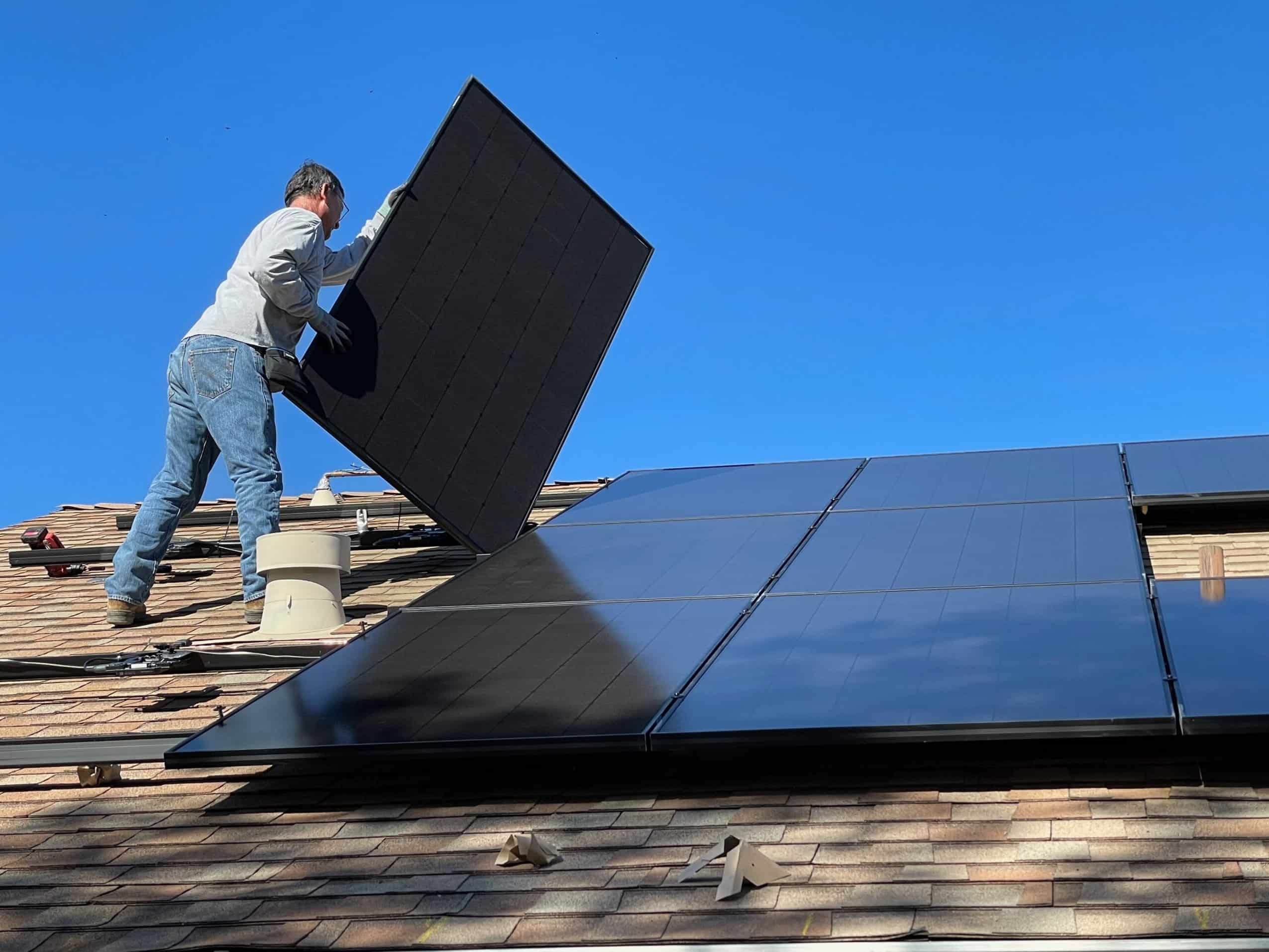
It is interesting to note that we need air conditioning when the temperatures are soaring, and the sun is high in the sky. Given the energy the sun creates it made sense therefore to use solar power for air conditioning units creating a logical relationship. While we do not use solar energy to full capacity in the UK, more homes are enjoying the benefits of their solar panels and the energy savings that are available with this kind of energy. 

We are now aware that we are responsible for reducing the number of greenhouse gases such as carbon dioxide that contribute vastly to climate change. Solar energy is one way we can do this as well as making things more cost effective. 

While it depends on the number of solar panels used and the efficiency of the chosen solar air conditioning unit, solar power can contribute up to 50% of the power required to operate a home air conditioning unit with dual benefits. Home energy bills reduce by up to 50% and carbon footprint halved. A fantastic result. 

While solar powered air conditioning units are more expensive than conventional units, the solar powered systems will pay back initial costs over time with the savings gained in energy costs and of course the reduction in carbon footprint. 

Solar air conditioning systems give the same results as regular models. There are three kinds of solar air conditioners:

Solar Thermal Hybrid Air Conditioners – These use solar energy to help the compressor with refrigeration. Electricity runs the electrical components and the fans.

Solar PV Hybrid Air Conditioners – These swap between battery power and solar power as required. When the weather conditions are sunny, the hybrid unit charges up the batteries. When it is not sunny the hybrid A/C runs on battery power while charging up the batteries using electricity. 

Absorption Chillers – This type uses solar to power the motor and fan while cooling and heating process using evaporation and condensation to produce cool air. Absorption chillers plug in to run from electricity or batteries.

Solar air conditioning gives results saving energy, money, and the environment! A topic to think about! 

Solar-assisted air conditioning can significantly reduce running costs over time. See full installation costs by property type to assess the full investment — supply, fit and commissioning included.

Energy-Efficient Air Conditioning Installation London

We install high-efficiency heat pump and inverter systems that deliver maximum cooling output with minimal energy consumption.

Quote from one of our happy air deflector free trial recipients:

“Our open plan office houses around 100 people. Air distribution and draft was an issue for some of them prior to fitting air deflectors. Since the fitting we’ve not had a single complaint!”

How we got here

Air conditioning is known to have been applied in Ancient Rome: aqueduct water was passed through walls of houses to cool them. In medieval Persia similar techniques involving the use of cisterns and wind towers were used in the hot season to cool buildings.

Modern air conditioning emerged after advances in 19th Century chemistry, and it was Willis Haviland Carrier who invented and first used a large-scale electrical air conditioning system in 1902.

Air Conditioner Definition

An appliance, unit, system, or machine designed to stabilise the temperature and humidity of air within an area (used for both heating as well as cooling). A refrigeration cycle is the most common method of achieving this although sometimes evaporative coolers are used for comfort cooling inside buildings and vehicles.

Main Pages

Unlock 4 Benefits of a Fully Automated Air Conditioning System

One thing you may consider before having your air conditioning unit installed is to automate your air conditioning system. In these times of conserving energy and looking at home energy efficiency, having control over your system makes sense.

 Image of a Fully Automated Air Conditioning System

A fully automated air conditioning system

Automating your air conditioning system can have many benefits that can help save energy, costs and give you more control over your indoor temperature. Some of the key benefits of automating your air conditioning system include:

  • Energy Efficiency: By automating your air conditioning system, you can ensure that it runs only when it’s needed, which can help to save energy and reduce costs.
  • Convenience: Automating your air conditioning system means that you don’t have to worry about adjusting the temperature manually, which can be especially helpful if you’re away from home for an extended period.
  • Better Control: Automating your air conditioning system gives you more control over your indoor temperature, which can help to improve your comfort levels.

Programmable Thermostat

A programmable thermostat is an essential component of any automated air conditioning system. Some of the key benefits of having a programmable thermostat include:

  • Energy Savings: A programmable thermostat can be set to automatically adjust the temperature based on the outside temperature, which can help to save energy and reduce costs.
  • Customizable Settings: With a programmable thermostat, you can set different temperature settings for different times of the day, which can help to improve your comfort levels.
  • Remote Control: Many programmable thermostats can be controlled remotely, which can be especially helpful if you’re away from home for an extended period.

Smartphone Remote Control

A smartphone remote control allows you to control your automated air conditioning system from anywhere, using your smartphone or other mobile device. Some of the key benefits of having a smartphone remote control include:

  • Convenience: With a smartphone remote control, you can adjust the temperature of your air conditioning system from anywhere, which can be especially helpful if you’re away from home for an extended period.
  • Energy Savings: By being able to control your air conditioning system remotely, you can ensure that it’s not running when it’s not needed, which can help to save energy and reduce costs.
  • Better Control: A smartphone remote control gives you more control over your air conditioning system, which can help to improve your comfort levels.

Automation within the home

Automating your air conditioning system within the home can have many benefits that can help improve your comfort levels and save energy. Some of the key benefits of automating your air conditioning system within the home include:

  • Customizable Temperature Settings: By automating your air conditioning system within the home, you can set different temperature settings for different rooms, which can help to improve your comfort levels.
  • Energy Savings: Automating your air conditioning system within the home can help to ensure that it’s not running when it’s not needed, which can help to save energy and reduce costs.
  • Better Control: Automating your air conditioning system within the home gives you more control over your indoor temperature, which can help to improve your comfort levels.

In conclusion, automating your air conditioning system can have many benefits that can help save energy, costs, and give you more control over your indoor temperature. With the help of programmable thermostats, smartphone remote control, and automation within the home, you can enjoy a more comfortable, energy-efficient home. For more information about how you can save energy and be in control, please contact Simply Air Conditioning London.

Looking for air conditioning installation in London? View our full range of installation services for homes and businesses across the capital.

Quote from one of our happy air deflector free trial recipients:

“Our open plan office houses around 100 people. Air distribution and draft was an issue for some of them prior to fitting air deflectors. Since the fitting we’ve not had a single complaint!”

How we got here

Air conditioning is known to have been applied in Ancient Rome: aqueduct water was passed through walls of houses to cool them. In medieval Persia similar techniques involving the use of cisterns and wind towers were used in the hot season to cool buildings.

Modern air conditioning emerged after advances in 19th Century chemistry, and it was Willis Haviland Carrier who invented and first used a large-scale electrical air conditioning system in 1902.

Air Conditioner Definition

An appliance, unit, system, or machine designed to stabilise the temperature and humidity of air within an area (used for both heating as well as cooling). A refrigeration cycle is the most common method of achieving this although sometimes evaporative coolers are used for comfort cooling inside buildings and vehicles.

Main Pages

Covid-19 and ventilation

The regulations pertaining to air in buildings mean employers must make certain there is a sufficient supply of fresh air (ventilation) in enclosed areas of workplaces. This is especially important during the Covid 19 pandemic.

Covid-19 and ventilation

Maximising fresh air in a space can be done by:

  • Natural Ventilation – relies on passive air flow through doors, windows, and air vents that can be fully or partially opened.
  • Mechanical Ventilation – uses fans and ducts to bring outside fresh air into the building. 
  • Combination of natural and mechanical ventilation, for example where mechanical ventilation relies on natural ventilation to maximise fresh air such as air conditioning systems.

Ventilation is a key control measure to reduce the risk of virus transmission as part of making a workspace or public space COVID-secure, along with social distancing, keeping everywhere clean, frequent handwashing and hand sanitisation.

It is important that employers and guardians of public spaces use these three key points as guidance to apply these measures to help visitors and workers.

1. Assess the risk from aerosol transmission in enclosed areas.

2. Identify poorly ventilated areas.

3. Decide on steps to be taken that will improve ventilation.

Why ventilation is important.

Good ventilation reduces how much virus is in the air. It helps reduce risk from aerosol transmission, when someone breathes in small particles (the aerosols) from the air in an enclosed space where a person infected with the virus has been.

In areas that are inadequately poorly ventilated.

Ventilation reduces the aerosol risk but has little impact on droplet transmission (where people are within 2 metres of each other) and contact transmission (touching surfaces)

Assessing aerosol transmission risk

Sufficient ventilation will look different in varying workplaces or settings.

You can reduce the risk of aerosol transmission by ensuring infected workers or visitors with coronavirus symptoms do not come into the workplace. Provide the right amount of fresh air and limit the number of people in each area. Pay attention to and think about the impact of the activities being performed. For example, activities that increase deeper breathing (singing, physical activities and shouting) should be especially monitored and Covid compliance strictly adhered to by limiting people participating, greater social distance, and the all-important ventilation.

Simply Air Conditioning London offer a 24 Hour Call Out. Call at any hour on 020 7870 2333. Or get in touch using the contact form!

Commercial Air Conditioning and Ventilation London

We design and install commercial air conditioning systems with fresh-air ventilation to meet workplace health and safety requirements across London.

Quote from one of our happy air deflector free trial recipients:

“Our open plan office houses around 100 people. Air distribution and draft was an issue for some of them prior to fitting air deflectors. Since the fitting we’ve not had a single complaint!”

How we got here

Air conditioning is known to have been applied in Ancient Rome: aqueduct water was passed through walls of houses to cool them. In medieval Persia similar techniques involving the use of cisterns and wind towers were used in the hot season to cool buildings.

Modern air conditioning emerged after advances in 19th Century chemistry, and it was Willis Haviland Carrier who invented and first used a large-scale electrical air conditioning system in 1902.

Air Conditioner Definition

An appliance, unit, system, or machine designed to stabilise the temperature and humidity of air within an area (used for both heating as well as cooling). A refrigeration cycle is the most common method of achieving this although sometimes evaporative coolers are used for comfort cooling inside buildings and vehicles.

Main Pages

6 Reasons to Love Air conditioning

Sometimes it is interesting to sit back and think about the ways in which an invention plays such an integral part of our lives in ways we often do not expect. Here we look at 10 ways air conditioning systems complement our lives day to day and help to progress new technologies and to even save lives. So many things are possible due to air conditioning so here are some celebrated facts.

6 Reasons to Love Air Conditioning

1. It Saves Lives

In 2003, an unprecedented European heat wave killed up to 70,000 people across the continent. In Auxerre, France for 8 days in a row the temperature reached 40°C which was extreme and there were very few air-conditioned buildings which could have saved lives. By contrast 20 years earlier a record 42 days straight of over 40°C were recorded in Texas, USA. No deaths were recorded due to the general use of air conditioning in buildings and cars.

2. It Makes Health Care Centres Healthier

Air-conditioned buildings can maintain controlled filtered air for comfort and hygiene preventing air borne viruses and maintaining a sterile environment for operating theatres and treatment rooms.

3. It Increases Productivity

Studies on productivity found that labour productivity increases and peaks at 18°C and drops by 15% at 23°C and by 28% when the mercury reaches 30°C. Workplace accidents also increased with the temperature in both factories and offices. Air conditioning maintaining a comfortable temperature increases safety and comfort.  

4. It Makes Technology Possible

Many technologies require clean room or cool environments. For example, the manufacture of computer chips and other technology component manufacturing requires clean room environments. Clean rooms are only possible with air conditioning as is the running of computer server rooms, call centres and other areas where technology needs to be kept cool.

 5. It Gave Us Hollywood Movies

Following the advent of air conditioning, cinema owners began installing air conditioning systems to attract more summer cinema audiences which in turn financed the movie industry. From silent film, through talkies and colour to today’s block busters. Without air conditioning perhaps there would be no Hollywood.

6. It Protects Interiors and Antiquities

Controlled temperatures and humidity from air conditioning protect internal furnishings, art, and artifacts from antiquity. Museums and galleries ensure that the preservation of these historical items are maintained in optimum conditions.  

Simply Air Conditioning London offer a 24 Hour Call Out. Call at any hour on 020 7870 2333. Or get in touch using the contact form!

Air Conditioning Installation London

From homes to offices, server rooms to restaurants — Simply Air Conditioning London designs and installs systems for every type of property across the capital.

Quote from one of our happy air deflector free trial recipients:

“Our open plan office houses around 100 people. Air distribution and draft was an issue for some of them prior to fitting air deflectors. Since the fitting we’ve not had a single complaint!”

How we got here

Air conditioning is known to have been applied in Ancient Rome: aqueduct water was passed through walls of houses to cool them. In medieval Persia similar techniques involving the use of cisterns and wind towers were used in the hot season to cool buildings.

Modern air conditioning emerged after advances in 19th Century chemistry, and it was Willis Haviland Carrier who invented and first used a large-scale electrical air conditioning system in 1902.

Air Conditioner Definition

An appliance, unit, system, or machine designed to stabilise the temperature and humidity of air within an area (used for both heating as well as cooling). A refrigeration cycle is the most common method of achieving this although sometimes evaporative coolers are used for comfort cooling inside buildings and vehicles.

Main Pages

Winter Humidity and Air Conditioning

During the winter, the comfort of your home and energy bills can be affected by the relative humidity of your home.

The term relative humidity (RH) refers to the amount of water vapour in the air at a certain temperature. For example, at 50 percent relative humidity, the air is holding 50% of the total moisture it can hold. The capacity of the air to hold water decreases as temperature decreases and increases as temperature rises.

For example, when the outdoor temperature is cold and the outdoor relative humidity is 70%, a home that has the thermostat set at 22°C has an indoor humidity level of around 6% – this is drier than the relative humidity in most deserts which is 25%!

Dry interior air will take moisture from where it finds it including from bodies. As a response, the evaporation of moisture from the body results in cooling so it is likely the thermostat to stay warm will be constantly turned up which of course leads to high energy bills.  We have all experienced being in a dry centrally heated environment and it can be uncomfortable and cause sore throats, dry noses and so forth.

However, if relative humidity indoors is maintained in the region of 35-to-45 %, this minimises the need for the air to replenish moisture, and little or no evaporation from bodies takes place. This means the thermostat can be turned down by a few degrees while maintaining comfort. The resulting energy cost saving is significant. You may save as much as 15% on energy costs.

The most efficient way to maintain the right level of humidity in your home is to rely on your air conditioning system. Your air conditioning system depending on type may include a whole house humidifying system or for stand-alone units will control the humidity in the space where it is needed. This is achieved by using a digital thermostat with humidity control. Comfort and cost savings in winter just when you need them.

Simply Air Conditioning London offer a 24 Hour Call Out. Call at any hour on 020 7870 2333. Or get in touch using the contact form!

Air Conditioning Installation and Maintenance London

A properly installed inverter air conditioning system manages both temperature and humidity throughout the year. Contact us to discuss installation or annual servicing.

Quote from one of our happy air deflector free trial recipients:

“Our open plan office houses around 100 people. Air distribution and draft was an issue for some of them prior to fitting air deflectors. Since the fitting we’ve not had a single complaint!”

How we got here

Air conditioning is known to have been applied in Ancient Rome: aqueduct water was passed through walls of houses to cool them. In medieval Persia similar techniques involving the use of cisterns and wind towers were used in the hot season to cool buildings.

Modern air conditioning emerged after advances in 19th Century chemistry, and it was Willis Haviland Carrier who invented and first used a large-scale electrical air conditioning system in 1902.

Air Conditioner Definition

An appliance, unit, system, or machine designed to stabilise the temperature and humidity of air within an area (used for both heating as well as cooling). A refrigeration cycle is the most common method of achieving this although sometimes evaporative coolers are used for comfort cooling inside buildings and vehicles.

Main Pages

7 Ways to Save Money When Using Air Conditioning

Our air conditioning systems are always there for us to keep us at the right temperature and to regulate the air in our homes. In these times, many of us are thinking about reducing emissions and using less electricity which of course has the benefit of saving money as well. Here we provide some tips to save money when using air conditioning.

1. Upgrade Windows

If you have older windows, there may be draughts and certainly there will be energy inefficiency which will make the air conditioning system work harder. Installing new energy efficient windows if possible, will save on electricity as the air conditioning will not be working overtime to combat constant temperature changes that older windows can cause. If new windows are not an option, then fixing air leaks by using a sealant and ensuring there are no draughts will help. 

2. Install a Thermostat

A thermostat that can be programmed will help cut costs by adjusting the air temperature depending on time of day or if there is anyone home. Some thermostats have an associated app so you can program on the move. It has been found that thermostats of this type save up to 10% on your bills annually.

3. Regular HVAC Air Filter Replacement

Air filters keep your air conditioning system running smoothly by promoting air circulation and preventing dust build up in vents. Dirty filters mean your system must work harder using more electricity.  Replace every few months or more often if you have pets. Replacement filters are not expensive and are an easy way to make your system more efficient. 

4. Reduce Sunlight

It may not happen that often in the UK, but sunlight streaming in through windows increases the temperature of your home. By closing curtains or using blinds or window shades during these episodes will save your air conditioning from working harder than it should saving money and using unnecessary energy. 

5. Home Insulation

Air is lost through attics, crawl spaces and walls.  Good insulation not only holds heat in but will also help maintain an ambient temperature without fluctuations once your air conditioning temperature is set.  Always a tried and trusted way of making a home efficient, insulation will save money on your air conditioning too. be worth the investment.

6. Regular Servicing

Maintenance is so important as an efficient air conditioning system is an economical one. Hiring a professional to regularly service your air conditioning system and replace parts when necessary can give your system longer more efficient life. 

7. Mindfulness

Just thinking about when you need to use your air conditioning instead of leaving it continually running will save you wasting money when you do not need to have the system running. Even adjusting the temperature can save you money

Simply Air Conditioning London offer a 24 Hour Call Out. Call at any hour on 020 7870 2333. Or get in touch using the contact form!

Efficient Air Conditioning Installation London

The best way to reduce long-term costs is to start with the right system, correctly sized and professionally installed. We also offer annual maintenance plans to keep running costs low.

Quote from one of our happy air deflector free trial recipients:

“Our open plan office houses around 100 people. Air distribution and draft was an issue for some of them prior to fitting air deflectors. Since the fitting we’ve not had a single complaint!”

How we got here

Air conditioning is known to have been applied in Ancient Rome: aqueduct water was passed through walls of houses to cool them. In medieval Persia similar techniques involving the use of cisterns and wind towers were used in the hot season to cool buildings.

Modern air conditioning emerged after advances in 19th Century chemistry, and it was Willis Haviland Carrier who invented and first used a large-scale electrical air conditioning system in 1902.

Air Conditioner Definition

An appliance, unit, system, or machine designed to stabilise the temperature and humidity of air within an area (used for both heating as well as cooling). A refrigeration cycle is the most common method of achieving this although sometimes evaporative coolers are used for comfort cooling inside buildings and vehicles.

Main Pages

Three Reasons for Air Conditioning at Work

Three Reasons for Air Conditioning at Work

Often in business investment is needed on those things that do not generate profit. Office environment is one of these intangible items that have major impact on your bottom line.  Air conditioning and comfort cooling for your staff is essential to maintain an atmosphere that is conducive to productivity. Here are our three main reasons why comfort cooling and air conditioning lead to a more profitable operation after the initial investment.

Improved Productivity

Overheated workplaces can affect productivity. Studies have shown that when an employee is uncomfortable in the workplace, they spend about an hour each day trying to relieve themselves of discomfort by visiting the restroom, leaving the building to buy cold drinks, finding cooler parts of the building to revive themselves, not to mention being distracted by discomfort when at their desks or work stations. The same applies in a cold or damp workplace.  This impact on productivity can be easily resolved by comfort cooling and an air conditioning system that maintains air quality.

Employee Health

Employee wellbeing is key for any business owner. Healthy, happy employees do not take sick days and will be more productive daily. Air conditioning allows filtered air to circulate that is refreshed and the use of filtration removes airborne pollutants, particles and viruses from the environment thus maintaining a healthier environment for work. Comfort cooling also helps in keeping employees alert and focussed.

Money Savings

It is often a false economy to avoid installing air conditioning as the initial investment can seem large. Compared to non-air-conditioned offices, the workplace efficiency is far greater in air-conditioned environments meaning more work is done which ultimately will make for an efficient well-run business with clear improvements to the bottom line. Most air conditioning systems these days are built with economy in mind and energy savings can be made by judicious use of timers, thermostats, and the type of efficiency rating of the comfort cooling units.

Simply Air Conditioning London offer a 24 Hour Call Out. Call at any hour on 020 7870 2333. Or get in touch using the contact form!

Commercial Air Conditioning Installation London

We design and install commercial air conditioning systems for offices, business parks, shops, and public spaces across London. All engineers are F-Gas certified.

Quote from one of our happy air deflector free trial recipients:

“Our open plan office houses around 100 people. Air distribution and draft was an issue for some of them prior to fitting air deflectors. Since the fitting we’ve not had a single complaint!”

How we got here

Air conditioning is known to have been applied in Ancient Rome: aqueduct water was passed through walls of houses to cool them. In medieval Persia similar techniques involving the use of cisterns and wind towers were used in the hot season to cool buildings.

Modern air conditioning emerged after advances in 19th Century chemistry, and it was Willis Haviland Carrier who invented and first used a large-scale electrical air conditioning system in 1902.

Air Conditioner Definition

An appliance, unit, system, or machine designed to stabilise the temperature and humidity of air within an area (used for both heating as well as cooling). A refrigeration cycle is the most common method of achieving this although sometimes evaporative coolers are used for comfort cooling inside buildings and vehicles.

Main Pages

Maintenance help for AC in the new normality

Maintenance help for AC in the new normality

During these uncertain and unprecedented times, we are all addressing the “new normality” which reaches far and wide across daily life, industry. work life and leisure. Many of our clients are wondering what they should be doing in relation to their air conditioning maintenance now we are living with COVID 19.

Our priority as engineers is to ensure clean air is always available to susceptible occupants of buildings private or public from the air conditioning system. To do this we work to contain any contaminated/used air or to disperse it to the exterior of a building. We also dilute the available air with clean, filtered air from outdoors which is combined with cleaning the air within a room or space. 

As the virus is so new, there are no filters yet that are proven to remove the virus. However, by using outdoor air we can negate this until the technology comes on stream. 

We would recommend that the maintenance of air conditioning in highly controlled environments such as gyms where less air flow is supplied when less people are there are adjusted to allow full air flow at all times even though this will use more energy. Another option when the building is empty is to purge the air in the space, but this will require professional advice. 

Any air handling units that have ultraviolet need to be on and fully operational. If you do not have UV, talk to our engineers as outside of pandemic times, they help destroy pollutants and viruses. 

Dirty and inefficient filters can make occupants more susceptible to respiratory infections and thus more vulnerable to COVID 19. Priority must be given to maintaining regular filter changes and general maintenance of the air conditioning systems.

Finally, we recommend focussing on these key areas:

  • Replace filters regularly. 
  • Research increasing the minimum Efficiency Rating Value (MERV) rating of your filters. The better the rating, the more airborne particles are captured. 
  • Clean the inside of the air handling units using the recommended products your engineers or unit manufacturers. 

Simply Air Conditioning London offer a 24 Hour Call Out. Call at any hour on 020 7870 2333. Or get in touch using the contact form!

Air Conditioning Maintenance and Servicing London

Regular maintenance keeps your system running efficiently, extends its lifespan, and ensures F-Gas compliance. We offer annual service plans across London.

Quote from one of our happy air deflector free trial recipients:

“Our open plan office houses around 100 people. Air distribution and draft was an issue for some of them prior to fitting air deflectors. Since the fitting we’ve not had a single complaint!”

How we got here

Air conditioning is known to have been applied in Ancient Rome: aqueduct water was passed through walls of houses to cool them. In medieval Persia similar techniques involving the use of cisterns and wind towers were used in the hot season to cool buildings.

Modern air conditioning emerged after advances in 19th Century chemistry, and it was Willis Haviland Carrier who invented and first used a large-scale electrical air conditioning system in 1902.

Air Conditioner Definition

An appliance, unit, system, or machine designed to stabilise the temperature and humidity of air within an area (used for both heating as well as cooling). A refrigeration cycle is the most common method of achieving this although sometimes evaporative coolers are used for comfort cooling inside buildings and vehicles.

Main Pages

Air Conditioning and Covid 19

Air Conditioning and Covid 19

The COVID-19 pandemic has changed daily life and as people are beginning to venture out again, some are concerned about the spread of the virus by means of air conditioning especially as the summer is upon us.  Here we answer the essential questions relating to air conditioning.

MYTH 1:  COVID 19 is airborne and circulating through air conditioning systems. 

FACT: COVID-19 is spread person to person via respiratory droplets. Any sneeze or cough has the potential to be inhaled by another person if inside the two-metre boundary from the infected person. The virus can live on surfaces for variable amounts of time and can be transmitted this way. 

Therefore, use of social distancing, hand hygiene, and sneeze and cough etiquette is essential. Face masks also protect and are important in public places. 

MYTH 2: Air Conditioning is spreading the virus in workplaces and public buildings

FACT: The risk of air conditioning spreading COVID-19 in the workplace or public buildings is extremely low and deemed highly unlikely by experts. There should be an adequate supply of fresh air and ventilation. Attention to using fresh air rather than recirculated is important. Your air conditioning London engineers can give advice on continuing use of air conditioning.

Air conditioning systems may be used as normal though it is recommended to swap your central air conditioning systems to fresh air instead of recirculated air.  Maintenance and servicing are important and for added safeguarding the filters should be continually changed. 

MYTH 3: Colder temperatures will kill the virus

FACT: Air conditioners set at extremely low temperature settings will not kill any virus but only serve to make anyone in that environment fluctuate in their body temperature which could affect their immune system. 

Our advice is to maintain temperature between 24 to 30 degrees so that it is pleasantly cool but does not cause people to feel chilled. 

Our Air Conditioning London engineers are trained in all COVID 19 protocols to come and adjust, maintain and service your ventilation systems for peace of mind in these difficult times.

Simply Air Conditioning London offer a 24 Hour Call Out. Call at any hour on 020 7870 2333. Or get in touch using the contact form!  

Air Conditioning Services London

Simply Air Conditioning London has been installing, servicing, and repairing air conditioning systems across London and the South East for over 15 years. All engineers are F-Gas certified.

Quote from one of our happy air deflector free trial recipients:

“Our open plan office houses around 100 people. Air distribution and draft was an issue for some of them prior to fitting air deflectors. Since the fitting we’ve not had a single complaint!”

How we got here

Air conditioning is known to have been applied in Ancient Rome: aqueduct water was passed through walls of houses to cool them. In medieval Persia similar techniques involving the use of cisterns and wind towers were used in the hot season to cool buildings.

Modern air conditioning emerged after advances in 19th Century chemistry, and it was Willis Haviland Carrier who invented and first used a large-scale electrical air conditioning system in 1902.

Air Conditioner Definition

An appliance, unit, system, or machine designed to stabilise the temperature and humidity of air within an area (used for both heating as well as cooling). A refrigeration cycle is the most common method of achieving this although sometimes evaporative coolers are used for comfort cooling inside buildings and vehicles.

Main Pages