
Tag: energy efficiency

Solar Powered Air Conditioning
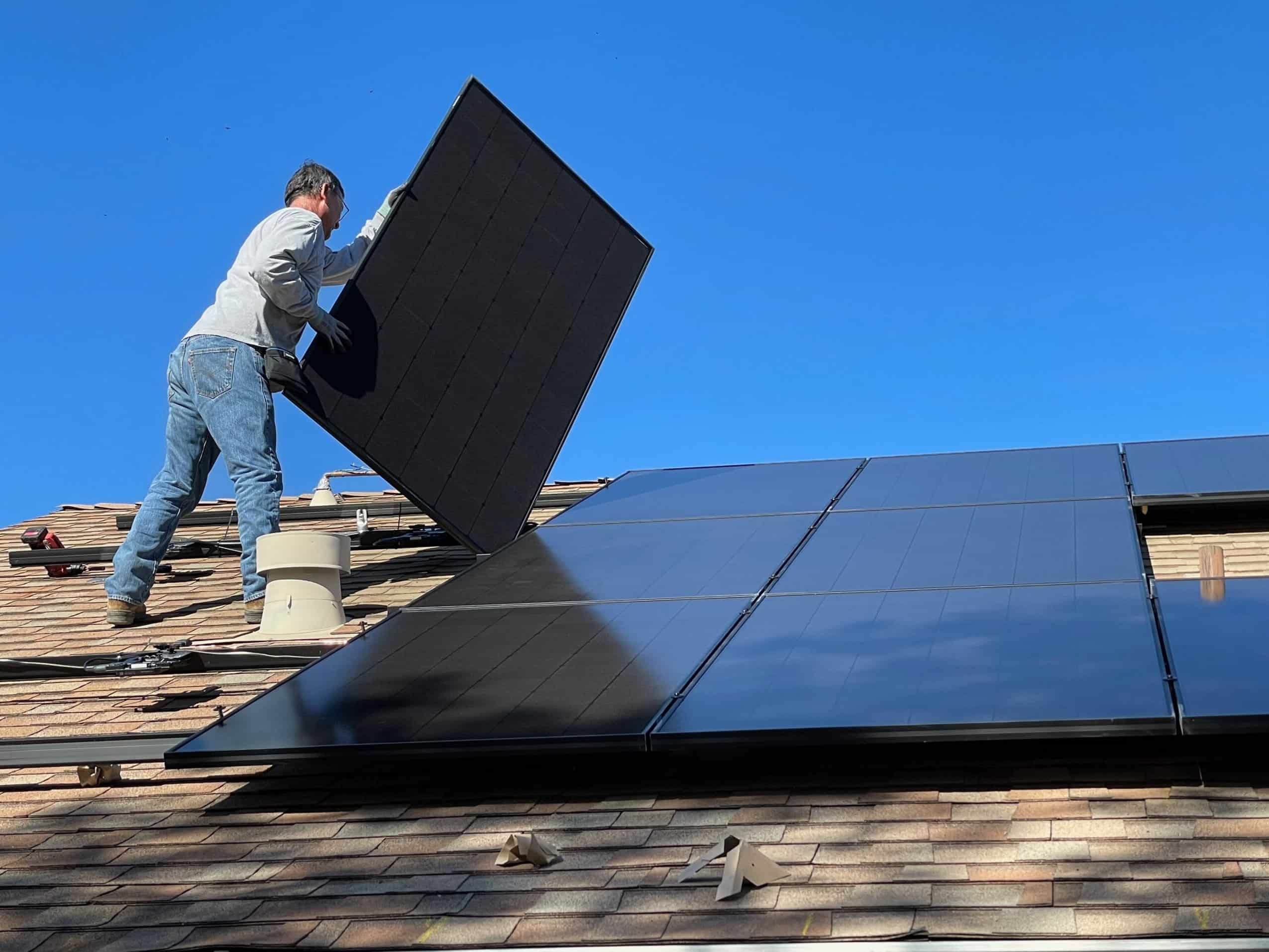
It is interesting to note that we need air conditioning when the temperatures are soaring, and the sun is high in the sky. Given the energy the sun creates it made sense therefore to use solar power for air conditioning units creating a logical relationship. While we do not use solar energy to full capacity in the UK, more homes are enjoying the benefits of their solar panels and the energy savings that are available with this kind of energy. 

We are now aware that we are responsible for reducing the number of greenhouse gases such as carbon dioxide that contribute vastly to climate change. Solar energy is one way we can do this as well as making things more cost effective. 

While it depends on the number of solar panels used and the efficiency of the chosen solar air conditioning unit, solar power can contribute up to 50% of the power required to operate a home air conditioning unit with dual benefits. Home energy bills reduce by up to 50% and carbon footprint halved. A fantastic result. 

While solar powered air conditioning units are more expensive than conventional units, the solar powered systems will pay back initial costs over time with the savings gained in energy costs and of course the reduction in carbon footprint. 

Solar air conditioning systems give the same results as regular models. There are three kinds of solar air conditioners:

Solar Thermal Hybrid Air Conditioners – These use solar energy to help the compressor with refrigeration. Electricity runs the electrical components and the fans.

Solar PV Hybrid Air Conditioners – These swap between battery power and solar power as required. When the weather conditions are sunny, the hybrid unit charges up the batteries. When it is not sunny the hybrid A/C runs on battery power while charging up the batteries using electricity. 

Absorption Chillers – This type uses solar to power the motor and fan while cooling and heating process using evaporation and condensation to produce cool air. Absorption chillers plug in to run from electricity or batteries.

Solar air conditioning gives results saving energy, money, and the environment! A topic to think about! 

Solar-assisted air conditioning can significantly reduce running costs over time. See full installation costs by property type to assess the full investment — supply, fit and commissioning included.

Energy-Efficient Air Conditioning Installation London

We install high-efficiency heat pump and inverter systems that deliver maximum cooling output with minimal energy consumption.

Quote from one of our happy air deflector free trial recipients:

“Our open plan office houses around 100 people. Air distribution and draft was an issue for some of them prior to fitting air deflectors. Since the fitting we’ve not had a single complaint!”

How we got here

Air conditioning is known to have been applied in Ancient Rome: aqueduct water was passed through walls of houses to cool them. In medieval Persia similar techniques involving the use of cisterns and wind towers were used in the hot season to cool buildings.

Modern air conditioning emerged after advances in 19th Century chemistry, and it was Willis Haviland Carrier who invented and first used a large-scale electrical air conditioning system in 1902.

Air Conditioner Definition

An appliance, unit, system, or machine designed to stabilise the temperature and humidity of air within an area (used for both heating as well as cooling). A refrigeration cycle is the most common method of achieving this although sometimes evaporative coolers are used for comfort cooling inside buildings and vehicles.

Main Pages

Unlock 4 Benefits of a Fully Automated Air Conditioning System

One thing you may consider before having your air conditioning unit installed is to automate your air conditioning system. In these times of conserving energy and looking at home energy efficiency, having control over your system makes sense.

 Image of a Fully Automated Air Conditioning System

A fully automated air conditioning system

Automating your air conditioning system can have many benefits that can help save energy, costs and give you more control over your indoor temperature. Some of the key benefits of automating your air conditioning system include:

  • Energy Efficiency: By automating your air conditioning system, you can ensure that it runs only when it’s needed, which can help to save energy and reduce costs.
  • Convenience: Automating your air conditioning system means that you don’t have to worry about adjusting the temperature manually, which can be especially helpful if you’re away from home for an extended period.
  • Better Control: Automating your air conditioning system gives you more control over your indoor temperature, which can help to improve your comfort levels.

Programmable Thermostat

A programmable thermostat is an essential component of any automated air conditioning system. Some of the key benefits of having a programmable thermostat include:

  • Energy Savings: A programmable thermostat can be set to automatically adjust the temperature based on the outside temperature, which can help to save energy and reduce costs.
  • Customizable Settings: With a programmable thermostat, you can set different temperature settings for different times of the day, which can help to improve your comfort levels.
  • Remote Control: Many programmable thermostats can be controlled remotely, which can be especially helpful if you’re away from home for an extended period.

Smartphone Remote Control

A smartphone remote control allows you to control your automated air conditioning system from anywhere, using your smartphone or other mobile device. Some of the key benefits of having a smartphone remote control include:

  • Convenience: With a smartphone remote control, you can adjust the temperature of your air conditioning system from anywhere, which can be especially helpful if you’re away from home for an extended period.
  • Energy Savings: By being able to control your air conditioning system remotely, you can ensure that it’s not running when it’s not needed, which can help to save energy and reduce costs.
  • Better Control: A smartphone remote control gives you more control over your air conditioning system, which can help to improve your comfort levels.

Automation within the home

Automating your air conditioning system within the home can have many benefits that can help improve your comfort levels and save energy. Some of the key benefits of automating your air conditioning system within the home include:

  • Customizable Temperature Settings: By automating your air conditioning system within the home, you can set different temperature settings for different rooms, which can help to improve your comfort levels.
  • Energy Savings: Automating your air conditioning system within the home can help to ensure that it’s not running when it’s not needed, which can help to save energy and reduce costs.
  • Better Control: Automating your air conditioning system within the home gives you more control over your indoor temperature, which can help to improve your comfort levels.

In conclusion, automating your air conditioning system can have many benefits that can help save energy, costs, and give you more control over your indoor temperature. With the help of programmable thermostats, smartphone remote control, and automation within the home, you can enjoy a more comfortable, energy-efficient home. For more information about how you can save energy and be in control, please contact Simply Air Conditioning London.

Looking for air conditioning installation in London? View our full range of installation services for homes and businesses across the capital.

Quote from one of our happy air deflector free trial recipients:

“Our open plan office houses around 100 people. Air distribution and draft was an issue for some of them prior to fitting air deflectors. Since the fitting we’ve not had a single complaint!”

How we got here

Air conditioning is known to have been applied in Ancient Rome: aqueduct water was passed through walls of houses to cool them. In medieval Persia similar techniques involving the use of cisterns and wind towers were used in the hot season to cool buildings.

Modern air conditioning emerged after advances in 19th Century chemistry, and it was Willis Haviland Carrier who invented and first used a large-scale electrical air conditioning system in 1902.

Air Conditioner Definition

An appliance, unit, system, or machine designed to stabilise the temperature and humidity of air within an area (used for both heating as well as cooling). A refrigeration cycle is the most common method of achieving this although sometimes evaporative coolers are used for comfort cooling inside buildings and vehicles.

Main Pages

How to Calculate BTU for Energy Efficiency Air Conditioning

BTU air conditioning calculatorEnergy efficiency air conditioning calculations are very important and vital to ensuring the right air conditioning system is installed into your home, office or other premises. It is important to consider the shape and size of the air conditioning components so everything fits and the area can be cooled adequately and efficiently. There are online calculators to help you calculate your individual needs, but with so many variables, we would recommend you get your efforts double-checked by an accredited air conditioning engineer.

British Thermal Units

You may have heard of BTU and wondered what it stands for. It means British Thermal Unit and is the worldwide measurement for a standard unit of energy. For the more technically minded, one BTU is the amount of heat required to increase the temperate of 1llb of liquid water by 1 degree Fahrenheit.

One BTU is defined as the amount of heat required to raise the temperature of one pound of liquid water by 1 degree Fahrenheit at its maximum density. Basically it is a measurement of energy and for air conditioning, the amount of energy required to perform the action of cooling the room and the number of units will indicate the air amount in cubic feet to alter temperature by 1 degree per hour or n BTU/hr.

To make it a little easier to understand, 1 BTU is equal to 251.9 calories, 3.413 BTU is equal to 1 watt and 3413 BTU is equal to 1kWatt. Electrical heating and cooling equipment are not the only generators of BTU even we human beings are expenders of energy. For instance when we are asleep we generate 250 BTU/hr up to 1040 BTU/hr when we are walking at a moderate pace.

Calculating for Air Conditioning

A BTU calculator works taking various factors and measurements into the equation using them to calculate the BTU your air conditioning system will need to generate:

  • Room Length, Width and Height
  • North Facing Walls
  • French Windows/Patio Doors
  • Double Glazing

External factors such as climate will also play a part and be factored in to the calculation. For example windy conditions on top of a hill or an exposed location will need to be compensated, while sheltered homes and those further south will also have their unique features accounted for.

Overestimating requirements is far better than underestimating, but there is no reason why the perfect solution cannot be arrived at by carefully calculating your needs with direct measurements and mitigating factors.

Air Conditioners

An air conditioner with 5000 BTU/hr decreases air temperature by one degree in one hour based on 5000 cubic feet of air by one degree in one hour. This type of output will efficiently cool a room of 200 to 300 square feet.

Home insulation and even insulation in a given room also play a part in air conditioner efficiency. A home with good loft insulation and cavity wall insulation and double-glazing will make for lower running costs and it may be possible to use a lower BTU output device. If the kitchen is to be taken into account, bear in mind a lot of heat is generated which will make a difference to your BTU calculations. You should also leave room for future changes you may anticipate in the home so for example if your calculations say you need a 10000 BTU unit, then buying an air conditioner up to 12000 will make for energy efficiency air conditioning.

Energy efficiency air conditioning calculations mean your air conditioning system will not have to work too hard and will keep the air temperature as comfortable and cool maintaining the temperature of your choosing. As the unit will not have to work harder or longer, savings will be seen on the energy bills.

An energy efficiency air conditioning engineer will perform the optimum calculation for your individual needs for a tailored solution just for you – they can even estimate the running costs for you.

Quote from one of our happy air deflector free trial recipients:

“Our open plan office houses around 100 people. Air distribution and draft was an issue for some of them prior to fitting air deflectors. Since the fitting we’ve not had a single complaint!”

How we got here

Air conditioning is known to have been applied in Ancient Rome: aqueduct water was passed through walls of houses to cool them. In medieval Persia similar techniques involving the use of cisterns and wind towers were used in the hot season to cool buildings.

Modern air conditioning emerged after advances in 19th Century chemistry, and it was Willis Haviland Carrier who invented and first used a large-scale electrical air conditioning system in 1902.

Air Conditioner Definition

An appliance, unit, system, or machine designed to stabilise the temperature and humidity of air within an area (used for both heating as well as cooling). A refrigeration cycle is the most common method of achieving this although sometimes evaporative coolers are used for comfort cooling inside buildings and vehicles.

Main Pages

Save Money with our Energy Efficiency Air Conditioning Tips

When the summer heat has been on (and lets face it the summer of 2013 was hot!) it is likely as autumn approaches and the electricity bills arrive on the doormat, you are turning your thoughts to how you could have cut the cost of your summer air conditioning. Everyone wants to save money and in this article we show you a few money saving ideas and tips to prepare you for the next cooling season.

Did you know that although air conditioning units are super energy efficient, they can still chalk up a hefty number of electricity units while in use during the summer heat? A faulty unit is obviously going to be less efficient than one that is well maintained and operated by the user effectively. It is extremely important to keep your air conditioning system well serviced and maintained.

Staying cool during the summer months can seem impossible at times which is why many people are turning to modern air conditioning systems for the convenience and comfort of having respite from endless heat. Nothing is worse than working outside in the garden or participating in an outdoor activity, only to be met with a stifling indoors muggy atmosphere when what you want is to feel cool. With summer air conditioning, you can be outside to your heart’s content knowing you will soon cool off again indoors with the comfort of air conditioning. The warm weather months are always so welcome and it is great that air conditioning adds to the summer easy living.

It is possible to save money when cooling in the summer months by operating your air conditioning most efficiently. It is worth bearing in mind that if you did not install the air conditioner yourself with the help of a reputable engineer, the wrong system for your home may have been installed. The right sized unit for the space is essential and a quick measure up of your room sizes and comparison with the recommendations for your air conditioner may show you that you have a unit that is too small or too large for the space being cooled. This will lead to inefficient operation and your electricity bills will be high unnecessarily.

Once you are sure it is the right unit for your accommodation, it is time to implement some simple measures to save money on your electricity bills. To stay cool, adopt some cool habits to save money. Small changes in your behaviour can make big differences to your air conditioning bills. Small changes such as keeping curtains and blinds closed during the hottest part of the day will leave your air conditioning unit less work to do. Using heat generating appliances such as a cooker will cause the air conditioning to work harder to cool the room so bear this in mind at meal times. Something as small as changing form old style lightbulbs to chlorofluorocarbons all help the air conditioning to run economically. Bear in mind that every time you increase the temperature of your air conditioner you will save money right off. Is it really essential for the room to be icy cold? No point slipping on a jumper because the A/C is too cold.

In the UK it is highly unlikely that solar screens will be required on the western aspect of houses, but given some of the extremes of temperature the UK often experiences these days, it is worth knowing about the option. The solar screens block up to 80% of the heat coming from the sun which in turn can save money by cutting 20% off your air conditioning bill. Another method of saving money is to make sure your house is well insulated, especially in the roof space and loft.

Combining a few lifestyle changes and adopting some new habits will significantly help to save money and lower energy bills. To finish here are some tried and tested tips to help you save money:

  • Decide if you really need to use the A/C – you may be able to get away with a fan to circulate air when it is not blisteringly hot. If a constant ambient temperature is required, then try to use a higher A/C temperature setting.
  • If it is a very humid day, set the fan speed on low and only use the high settings on less humid days.
  • Keep the air conditioning unit in the shade. This can save you up to 10% in energy costs. Always be sure the airflow is not blocked by leaves or garden debris.
  • Turn off the air conditioning when you leave the house or the room you are in. Just by following this simple rule, up to 20% savings can be made on your energy bills.

Quote from one of our happy air deflector free trial recipients:

“Our open plan office houses around 100 people. Air distribution and draft was an issue for some of them prior to fitting air deflectors. Since the fitting we’ve not had a single complaint!”

How we got here

Air conditioning is known to have been applied in Ancient Rome: aqueduct water was passed through walls of houses to cool them. In medieval Persia similar techniques involving the use of cisterns and wind towers were used in the hot season to cool buildings.

Modern air conditioning emerged after advances in 19th Century chemistry, and it was Willis Haviland Carrier who invented and first used a large-scale electrical air conditioning system in 1902.

Air Conditioner Definition

An appliance, unit, system, or machine designed to stabilise the temperature and humidity of air within an area (used for both heating as well as cooling). A refrigeration cycle is the most common method of achieving this although sometimes evaporative coolers are used for comfort cooling inside buildings and vehicles.

Main Pages

Seawater Air Conditioning

At Simply Air conditioning London we’re always interested in new innovations that help make a greener planet, while new advances in technology really excite us. That’s why we were interested in the new Honolulu Seawater Air Conditioning project, which is utilising piped seawater in an effort to cut down on energy usage in downtown Honolulu. The project will cost some $250 million.

The system will use a thick pipe about five feet across placed, in the deep water about four miles offshore. It will be able to stand up to deployment stresses and withstand the largest storm surf and hurricane waves throughout its lifetime.

The pipe will be in water close to 2000 feet deep. Cold water is sucked up and transported via the pipe into a system that feeds the downtown area.

Sea Water Air Conditioning (SWAC) takes advantage of available deep cold seawater to replace energy-intensive central refrigeration systems that cool chilled water to provide air conditioning in one or more buildings. Such a system can also utilise cold lakes or river water as the cold source.

The cold from the seawater is transferred to a separate loop filled with freshwater. Freshwater is then pumped to individual buildings. The water will be pumped back via a cooling plant and through a heat exchanger returning the seawater back to the ocean. The water, at this stage around 10 degrees warmer, will dissipate quickly to minimise impact on marine life.

“Clean, cool, and green” is how Honolulu Seawater Air Conditioning describes the technology.

Seawater air conditioning systems tap into a significant and highly valuable natural energy resource available at many coastal points. The potential benefit of using colder seawater or lake water for air conditioning include:

  • Large energy savings approaching 90%
  • Proven technology
  • Short economic payback period
  • Positive environmental attributes
  • Costs are almost independent of any future price increases in energy
  • No evaporative water consumption
  • There is availability of cold sea water for other applications

The Honolulu plan calls for driving about 100 piles about a quarter to a half mile offshore. The piles will secure the pipes to the floor in a surf zone where the pipe is subject to movement. Marine life could be impacted by vibration, but marine life, like dolphins and whales will be monitored by marine mammal experts and scientists that the Honolulu Seawater Air Conditioning will have on board at all stages of the project.

While the amount of seawater that can be taken from the ocean is limited, there is still capacity to power forty large sized buildings in the downtown area. The energy savings that will result as the outcome of this project, brings hope to advancement of more eco friendly methods of energy usage. Although the investment is substantial, the long-term benefits may be worthwhile.

Although it’s only possible in certain areas of the world, it is great to see the seawater air conditioning innovation being utilised where possible and we hope to see many more similar innovations in air conditioning and the world in general to help us push towards a greener planet.

Quote from one of our happy air deflector free trial recipients:

“Our open plan office houses around 100 people. Air distribution and draft was an issue for some of them prior to fitting air deflectors. Since the fitting we’ve not had a single complaint!”

How we got here

Air conditioning is known to have been applied in Ancient Rome: aqueduct water was passed through walls of houses to cool them. In medieval Persia similar techniques involving the use of cisterns and wind towers were used in the hot season to cool buildings.

Modern air conditioning emerged after advances in 19th Century chemistry, and it was Willis Haviland Carrier who invented and first used a large-scale electrical air conditioning system in 1902.

Air Conditioner Definition

An appliance, unit, system, or machine designed to stabilise the temperature and humidity of air within an area (used for both heating as well as cooling). A refrigeration cycle is the most common method of achieving this although sometimes evaporative coolers are used for comfort cooling inside buildings and vehicles.

Main Pages

Data Loggers for Air Quality

Data loggers are electronic instruments that record different kinds of data. They are often small machines run on battery power. The applications are used for measuring many kinds of things but are commonly used in air conditioning systems to measure energy efficiency, air quality, and temperature. The good thing about these devices is that information is recorded 24/7 and have the capacity to record data for any months before requiring a battery change.

Important data can be key to understanding why a system has an intermittent fault or air quality is poor. Data loggers are useful diagnostic tools and can sometimes get to the root of a problem that is not obvious using normal engineering processes. The majority of these devices use a personal computer to utilise the logger and look at the data collected.

There are two ways to capture data; one is data logging and the other data acquisition. Data loggers are stand-alone devices whereas the data acquisition device needs a personal computer connection to transmit data for analysis

The data loggers used on most AC systems have a large data memory to allow for many months of data capture. Data loggers are quite sophisticated and calibrated to within miniscule tolerances allowing accurate information to be interpreted. Data loggers can also be alarmed to draw notice to critical events in the air conditioning system. Some of the latest data loggers can be analysed via the internet because they are wireless, meaning any alerts can be monitored remotely

Data logger manufacturers are making the data more compatible with standard software so that regular Windows programs can use the data captured for analysis. This is of major advantage to building managers for example who may be monitoring different systems.

While data loggers are not essential equipment, they can be of great assistance when things are not quite right with an air conditioning system. By monitoring airflow, humidity, air quality, and temperature, they can assist in diagnosing problems as well as providing statistics on usage and efficiency.

Data loggers are used in a vast array of different industries and processes and we think these little devices are a definite plus for the future as they become more accessible and sophisticated.

In the meantime, you can rest assured that our qualified accredited air conditioning engineers are the best in town and you can rely on them to attend to all your air quality needs.

Quote from one of our happy air deflector free trial recipients:

“Our open plan office houses around 100 people. Air distribution and draft was an issue for some of them prior to fitting air deflectors. Since the fitting we’ve not had a single complaint!”

How we got here

Air conditioning is known to have been applied in Ancient Rome: aqueduct water was passed through walls of houses to cool them. In medieval Persia similar techniques involving the use of cisterns and wind towers were used in the hot season to cool buildings.

Modern air conditioning emerged after advances in 19th Century chemistry, and it was Willis Haviland Carrier who invented and first used a large-scale electrical air conditioning system in 1902.

Air Conditioner Definition

An appliance, unit, system, or machine designed to stabilise the temperature and humidity of air within an area (used for both heating as well as cooling). A refrigeration cycle is the most common method of achieving this although sometimes evaporative coolers are used for comfort cooling inside buildings and vehicles.

Main Pages

Efficiency with annual maintenance

Air Conditioning maintenanceWhether you have just one air conditioner in your home or an entire central air cooling system, you will need a reliable contractor to help with cleaning, maintaining, and ensuring you are saving as much energy as possible when you are using your air conditioning system.

Cleaning and replacing your filters each month will help to maintain your air conditioning unit. HVAC maintenance also includes annual maintenance from a professional service to ensure your air conditioning unit’s equipment is up to par and is not leaking or causing an over usage of energy in your home. If you are not sure how to install and replace the filters in your air conditioner, you can refer to the user manual of your unit or call us in to assist you with the installation and replacement of the new filters your unit requires.

Before working with any professional service for your HVAC maintenance or even repairs, make a list of all of the concerns you have with your unit, including any questions regarding the air conditioners filters, output of energy, or even the programmed thermostat you are using to work the unit. Asking questions will allow you to get the answers you need when you are working with a certified professional.

To help yourself it is important to ensure your home is thoroughly insulated, including your loft space. Close off cracks under doors and within doorframes to help keep the air warm or cool air in your home, this will require less usage and use less electricity. You should also consider keeping your air conditioner set at one temperature as much as possible to reduce fluctuations in your electricity bills.

Set your home’s thermostat to an overall higher temperature when you are not at home or off at work for the day to save on energy use when you do not need the air conditioning. Also, opt for a programmable thermostat when you are trying to save money on your electric bill, as it will be a more accurate way to track your home’s temperature and the amount of energy you are using regularly.

Consider turning off your unit when the weather conditions permit. You can also save on energy usage by closing off specific ducts in your home to concentrate the air conditioning into specific locations. This will allow you to cool other rooms quicker, needing less air conditioning or allowing you to keep the air conditioner set a bit higher without feeling too hot or uncomfortable.

HVAC maintenance is important and adds to the reliability of your system as well as saving money. Call us today for details of our maintenance plans.

Quote from one of our happy air deflector free trial recipients:

“Our open plan office houses around 100 people. Air distribution and draft was an issue for some of them prior to fitting air deflectors. Since the fitting we’ve not had a single complaint!”

How we got here

Air conditioning is known to have been applied in Ancient Rome: aqueduct water was passed through walls of houses to cool them. In medieval Persia similar techniques involving the use of cisterns and wind towers were used in the hot season to cool buildings.

Modern air conditioning emerged after advances in 19th Century chemistry, and it was Willis Haviland Carrier who invented and first used a large-scale electrical air conditioning system in 1902.

Air Conditioner Definition

An appliance, unit, system, or machine designed to stabilise the temperature and humidity of air within an area (used for both heating as well as cooling). A refrigeration cycle is the most common method of achieving this although sometimes evaporative coolers are used for comfort cooling inside buildings and vehicles.

Main Pages

Tips for Conserving Energy and Money with your Air Conditioning System

Energy Efficiency in Air ConditioningBetween 50-70% of a home’s energy is used on heating and cooling. While a good portion of this effort goes toward heating water for dishes, clothes, and showers, regulating a home’s temperature eats up much of the energy bill. There are ways to minimise your costs by following a few simple practices.

When you are looking to install a heating or cooling system, look out for product features designed to save you money from the beginning. We are able to advise you completely obligation free on the best systems for your circumstances and budget.

Programmable Thermostats

Programmable thermostats have the quickest return on invest, sometimes as fast as two months. These particular devices allow you to set the thermostat to raise or lower the temperature when you leave the house, then adjust the temperature again just before you walk back through the door. This product will keep you from heating or air conditioning your home unnecessarily while you are away from home or asleep. This will result in great cost savings

Energy Efficient HVAC Units

The energy star rating ensures that the product will perform above a certain efficiency standard, thus guaranteeing energy savings. The energy cost savings can be at least 20% with units of this type.

[button link=”http://simplyairconditioninglondon.co.uk” style=”info”]Simply Air Conditioning London are your HVAC experts when it comes to saving money and energy[/button]

There are tips to save money and use less energy with your heating and air conditioning systems and we have put a few of them together here

  • Install door brushes on all entry and exit doors. This will significantly reduce or even stop any free airflow under the bottoms of doors.
  • Upgrade your home insulation. It will give a great return on investment, especially if there are areas in your home that have no insulation at all, such as in basements or lofts. There are local authority grants for insulation if you qualify which is worth looking into.
  • Close off areas of your house that you do not use regularly. This is a sensible way to control energy usage. Close vents and doors to rooms that are infrequently used, as there is no sense heating or cooling a portion of the home that you do not use.
  • In hot conditions, do not run dishwashers or clothes dryers during the hottest parts of the day, as your air conditioning unit will have to work overtime to bring the temperature back down to level. You can reverse this principle in wintertime to conserve heat, as the operation of these appliances will generate a certain amount of heat.
  • Turn the heat down when you leave the house during the day. The few minutes of cold that you will have to bear when you return home are worth the 8+ hour savings in your daily heating bill.
  • In the summer, pick the same temperature or even turn air conditioning off when you leave to save energy and money.

Quote from one of our happy air deflector free trial recipients:

“Our open plan office houses around 100 people. Air distribution and draft was an issue for some of them prior to fitting air deflectors. Since the fitting we’ve not had a single complaint!”

How we got here

Air conditioning is known to have been applied in Ancient Rome: aqueduct water was passed through walls of houses to cool them. In medieval Persia similar techniques involving the use of cisterns and wind towers were used in the hot season to cool buildings.

Modern air conditioning emerged after advances in 19th Century chemistry, and it was Willis Haviland Carrier who invented and first used a large-scale electrical air conditioning system in 1902.

Air Conditioner Definition

An appliance, unit, system, or machine designed to stabilise the temperature and humidity of air within an area (used for both heating as well as cooling). A refrigeration cycle is the most common method of achieving this although sometimes evaporative coolers are used for comfort cooling inside buildings and vehicles.

Main Pages

Fujitsu V II [Revisited]

The Fujitsu V II revisited

Fujitsu V-II(Click here to see our original article on the Fujitsu VII.)

As regulations of energy conservation are tightened up due to the energy conservation policy of various countries of the world, a higher energy saving performance is required in commercial use air conditioning systems which account for a large part of power consumption at stores and offices.

The demand for multi air conditioning systems by individual air-conditioning systems controlling the air conditioning needs for each room is growing steadily. In order to meet such needs, Fujitsu has developed the commercial use modular type multi air conditioning system “AIRSTAGE” V-II series realising industry’s top class energy saving performance IEER 21.7 as well as high installation space saving and design flexibility.

The new series is the leading-edge commercial use air conditioning system with capacity of 72,000Btu (21.1kW) to 288,000Btu (84.3kW) combining up to 3 sets of outdoor units, and has accomplished industry’s top class energy saving performance by original energy-saving technology such as “Round-corner type high density multi-path heat exchanger”, and “Sine wave DC inverter control”. Furthermore, by adopting an upright structure of the outdoor unit and “corner-cut air intake structure”, the installation space saving has been realised while keeping high energy-saving performance. Also, by adopting the centralized remote control system, the operating efficiency of the total system is enhanced.

Features (V-II Series)

High Efficiency Operation

  • Advanced system considers high efficiency operation.
  • High Efficiency
  • Energy efficiency combination
  • Various energy saving features

Design Versatility

  • V-II systems can be applied to a wide variety of Building applications due to the reduced outdoor unit size and piping length capabilities.
  • Flexible and easy piping design

Easy Installation

From transportation of the product to address setting for commissioning, significant improvements have been made which reduce the cost of installation.

  • Easily transported
  • Simple wiring & piping work
  • Easy setting operation
  • Easy maintenance

Comfort and Convenience

Low noise, easy operational settings, and comfortable temperature adjustment allows for V-II systems to be used in building air conditioning applications.

  • Quiet operation
  • Auto changeover function
  • Comfortable, convenient control
  • Non-stop oil recovery operation

Line Up (V-II Series)

V-II series consists of “Outdoor units”, “Indoor units”, and “Controls System”, and “Adaptor / Convertor Units”, and “Option parts (Option)”.

Outdoor Unit

  • Extensive line up from 8HP to 48HP in 2HP increments.
  • Space saving combination and Energy efficient combination available, which can be selected to suit any air conditioning needs.

Combinations other than the following are not recommended.

Indoor Unit

12 Types, 55 Models, Capacity range from 2.2kW to 25.0kW

Comprehensive range of indoor units of variety design and capacity ranges available which can be selected to suit any air conditioning needs.

Controls System

Every user’s needs are supported by offering a variety of controls, such as individual control, central control and building management system control options. Get your Fujtisu V-II series air conditioning system in London from Simply Air Conditioning London.

(Click here to see our original article on the Fujitsu VII.)

Quote from one of our happy air deflector free trial recipients:

“Our open plan office houses around 100 people. Air distribution and draft was an issue for some of them prior to fitting air deflectors. Since the fitting we’ve not had a single complaint!”

How we got here

Air conditioning is known to have been applied in Ancient Rome: aqueduct water was passed through walls of houses to cool them. In medieval Persia similar techniques involving the use of cisterns and wind towers were used in the hot season to cool buildings.

Modern air conditioning emerged after advances in 19th Century chemistry, and it was Willis Haviland Carrier who invented and first used a large-scale electrical air conditioning system in 1902.

Air Conditioner Definition

An appliance, unit, system, or machine designed to stabilise the temperature and humidity of air within an area (used for both heating as well as cooling). A refrigeration cycle is the most common method of achieving this although sometimes evaporative coolers are used for comfort cooling inside buildings and vehicles.

Main Pages

The Mitsubishi Electric City Multi

Mitsubishi Electric City Multi Air Conditioning

The Mitsubishi Electric City Multi – VRF Systems are energy efficient featuring unique 2-pipe technology that provides simultaneous heating and cooling. Up to 60 indoor units can connect to a single heat recovery outdoor unit. Available are Heat recovery systems of 22 – 90 kW and heat pump systems of 10 kW – 140 kW. From this range, the Mitsubishi Electric CITY MULTI Y-Series is a proven performer.

One case study using this technology featured a small museum constructed of sandstone that became extremely hot in summer. As a building with some heritage and pedigree, the air conditioning system needed to have an unobtrusive or harmonious prescence when installed. Mitsubishi were first choice of the project engineers and after deliberation, the CITY MULTI Y-Series Variable Refrigerant Flow (VRF) units, which included one outdoor unit, and 12 indoor units were selected.

The use of VRF technology allowed one condensing unit to be used for the project. This reduced the total amount of piping runs required, compared to using multiple split systems. Two pipes from the condensing unit easily branched off to each indoor unit.

One of the benefits of the outdoor unit’s compact design is that it was easily hidden within a louvered casing that blended with the surroundings. The indoor units were also unobtrusive and small enough (only 220 mm in depth) so that they could be placed against walls and under stairs.

The selection of CITY MULTI VRF system was also based on proven performance at other similar installations to the client’s complete satisfaction.

Short Installation Time

The installation of the CITY MULTI system went ahead without issue and took about three weeks to complete. The cabling and piping design worked and the visual and physical impacts of the CITY MULTI units were minimal.

The CITY MULTI systems perform well and the layout and units are sympathetic with the look of any building where an unobtrusive air conditioning system is required. From the building’s point of view, visitors stayed longer and more people visited when it was open to the public because of the new Mitsubishi cooling system. The building was not affected visually and there was a minimum of physical impact on the building. The installation also meant that the building was compliant with occupational health and safety legislative requirements making it a grand place to work for its employees too. Air quality is improved and the installation has benefit in so many tangible and intangible ways.

If you have a building in London that needs sympathetic installation of an air conditioning system rely on Mitsubishi products and our expertise to give you an installation that organically blends in with the existing surroundings but more importantly delivers high performance at an affordable price.

Quote from one of our happy air deflector free trial recipients:

“Our open plan office houses around 100 people. Air distribution and draft was an issue for some of them prior to fitting air deflectors. Since the fitting we’ve not had a single complaint!”

How we got here

Air conditioning is known to have been applied in Ancient Rome: aqueduct water was passed through walls of houses to cool them. In medieval Persia similar techniques involving the use of cisterns and wind towers were used in the hot season to cool buildings.

Modern air conditioning emerged after advances in 19th Century chemistry, and it was Willis Haviland Carrier who invented and first used a large-scale electrical air conditioning system in 1902.

Air Conditioner Definition

An appliance, unit, system, or machine designed to stabilise the temperature and humidity of air within an area (used for both heating as well as cooling). A refrigeration cycle is the most common method of achieving this although sometimes evaporative coolers are used for comfort cooling inside buildings and vehicles.

Main Pages