Latest

About Simply Air Conditioning London

Simply Air Conditioning LondonAt Simply Air Conditioning London we pride ourselves on our specialist knowledge, professional qualified engineers and track record of successfully implemented projects covering a broad spectrum of residential and commercial air conditioning installations. Our attention to detail and guaranteed work means you are assured of a high quality job that is designed project managed and implemented to the highest standards in compliance with current legislation.

We want to ensure all customers are comfortable and happy with their projects large or small and therefore we operate a 24 hour hotline and emergency service for peace of mind. In this blog post we provide a summary of all the services we can offer.

Domestic Heating and Air Conditioning

These days many people are looking for alternative heating and cooling solutions and are choosing air conditioning as a year round solution to their needs. Those conscious of reducing carbon footprint are enjoying “A” rated systems that are 400% more energy efficient than conventional systems. The savings on energy bills and the luxury of remote and wireless control systems are why more people are turning to this type of system.

Commercial Heating and Air Conditioning

Commercial business owners are realising the benefits of air conditioning for much the same reason as domestic customers. A more energy efficient operation with cost savings is a huge benefit to cash-strapped businesses and also allows them to comply with the latest health and safety legislation for comfort of employees. In schools and colleges, the right system will lead to cost savings and a more pleasant study environment for students.

Specialist Air Conditioning

We can equip professional kitchens, retail premises, clean rooms and surgeries for dentists, doctors and veterinary surgeons.

Retail Heating and Air Conditioning

Nowadays, the adage the “customer is king” was never more relevant. When every sale matters, it is essential that customers feel comfortable within the retail environment to enjoy their purchasing experience. Nothing is worse than an overheated store and hot days make air conditioned shops a haven (as well as gaining extra sales). We provide air conditioning systems to suit every commercial centre with our no obligation site survey and quotation.

Office Air Conditioning

When you are dealing with office environments, you need a specialist engineer to assess the requirements, as special care is needed to install the right system that can provide clean air and circulation when workers are static at desks. The right temperature and anti-bacterial filters improve productivity and reduce bugs and germs in the atmosphere.

Computer Server Rooms

IT equipment generates a lot of heat and needs to be kept cool in order to avoid overheating and down time. Our dedicated air conditioning systems ensure clean air and the right temperature to keep server equipment operating without bother.

Conservatory Air Conditioning

Conservatories lose a lot of heat due to their glass construction and air conditioning is an efficient way to harness the external temperatures to either cool or heat the room. For conservatories, air conditioning is so versatile and can be controlled instantly as weather conditions change outside. This controllability means the conservatory can be used all year round in comfort, never overheating or becoming too cold.

Air Conditioning Maintenance

Naturally, our job is not done when the installation of your system is complete. We offer a guarantee and also affordable maintenance plans which enable you to forget about your system in the sure knowledge that the system is being looked after by professionals at regular check-ups. Maintenance is a way to avoid costly repairs and to keep on top of things avoiding the inconvenience of a major breakdown or repair.

If things do go wrong, we are there for you at the end of the phone 24 hours a day and will respond rapidly to your situation.

We can offer you a bespoke plan to suit your budget and system. The benefits will soon be seen as the life expectancy of your system will increase by regular maintenance. Our professional experience has shown that most major repairs are caused by lack of maintenance, so it is something to consider

Simply Air Conditioning London has built relationships with customers through word of mouth recommendations and we also proudly retain testimonials from satisfied customers that are always available to anyone visiting us. It ensures peace of mind when a customer can follow up on our work before making a decision. We stand by our credentials and qualified staff and belong to the industry accredited bodies. We look forward to your call and will help you to decide on an affordable air conditioning system to meet your needs. Why not contact us today?

Quote from one of our happy air deflector free trial recipients:

“Our open plan office houses around 100 people. Air distribution and draft was an issue for some of them prior to fitting air deflectors. Since the fitting we’ve not had a single complaint!”

How we got here

Air conditioning is known to have been applied in Ancient Rome: aqueduct water was passed through walls of houses to cool them. In medieval Persia similar techniques involving the use of cisterns and wind towers were used in the hot season to cool buildings.

Modern air conditioning emerged after advances in 19th Century chemistry, and it was Willis Haviland Carrier who invented and first used a large-scale electrical air conditioning system in 1902.

Air Conditioner Definition

An appliance, unit, system, or machine designed to stabilise the temperature and humidity of air within an area (used for both heating as well as cooling). A refrigeration cycle is the most common method of achieving this although sometimes evaporative coolers are used for comfort cooling inside buildings and vehicles.

Main Pages

The Warmest Year Yet

Hot London Summer
‘London in Summer’ by ThisParticularGreg, licensed under CC BY 2.0
The long sunny and hot days of 2014 are just a memory of beach picnics, barbeques and dining alfresco sporting a home grown tan. In fact figures for 2014 show it was the warmest year on record for the UK since comprehensive records began in 1910. Another index, the Central England Temperature series documents records dating back to 1659 and 2014 has broken all records so far for the central England area it covers.

The 9.9 degrees temperature average for the year was 1.1 degrees over the average (long term) with 2014 proving much warmer than the record figures of 2006 – the last warmest year on record. Interestingly, 2014 was also the 4th wettest year on the records that date back to 1910. It also means that the UK has experienced eight of the warmest years on record in the period from 2002 with only two other years that appear in the top ten warmest occurring prior to 2002. UK wide 2014 was the warmest on record with the exception of Northern Ireland which experienced its 3rd warmest year behind 2006 and 2007.

Unsurprisingly, demand for air conditioning systems has been increasing accordingly with many business owners and domestic home owners appreciating how an air conditioning system is of benefit not only in these increasingly warm summers but also for winter heating as well.

The year 2014 did not show any spectacular record breaking temperatures, but each month was consistent in warmth and temperature averages. The UK was not alone and 2014 globally was a very warm year. Commentators stated this was consistent with the underlying global warming trend, clearly showing the impact of manmade climate change, referring to the recurring pattern of warm years since 2002.

There were enormous benefits of the warm year with farmers experiencing bumper crops of wheat and oats and apple growers experiencing particularly abundant harvests which in turn meant lower prices for consumers, thanks to the warmth providing optimum growing conditions.

Nevertheless, warm though it was, 2014 experienced some extreme weather conditions as storms battered the country in the winter months with torrential downpours of rain.

The UK air conditioning and climate control market has to date not been as developed as other nations but this has been changing along with the increasing climate changes as more people switch to an air conditioning solution to cope with the warmer weather and make efficiency savings on their climate control. The trends in UK air conditioning trends follow the latest innovations in efficient and stylish technology from around the globe with the UK market providing the very latest solutions.

So many people are realising how sensible an air conditioning solution is. Not only can they regulate temperature in the summer months but have the added bonus of exceptional heating in the winter affordably if they choose a dual purpose system. Air conditioning for domestic use is proving to be extremely popular as more householders are discovering the benefits. Business owners meanwhile are realising that a comfortable working environment means there is no lack of productivity when things get hot in the office and they fulfil health and safety obligations as well. Each generation of air conditioning systems is becoming more energy efficient and help to work towards reducing global warming effects with safe gases and energy efficient operation.

Developed countries such as the UK that are in temperate and colder climates going forward will have a decreased demand for winter heating according to industry experts as winters become increasingly warmer. With alternative energy production coming on stream to generate electricity which in turn will bring down the cost of electricity it seems that air conditioning systems for homes and offices to suit summer and winter needs are becoming the system of choice as the climate evolves.

Quote from one of our happy air deflector free trial recipients:

“Our open plan office houses around 100 people. Air distribution and draft was an issue for some of them prior to fitting air deflectors. Since the fitting we’ve not had a single complaint!”

How we got here

Air conditioning is known to have been applied in Ancient Rome: aqueduct water was passed through walls of houses to cool them. In medieval Persia similar techniques involving the use of cisterns and wind towers were used in the hot season to cool buildings.

Modern air conditioning emerged after advances in 19th Century chemistry, and it was Willis Haviland Carrier who invented and first used a large-scale electrical air conditioning system in 1902.

Air Conditioner Definition

An appliance, unit, system, or machine designed to stabilise the temperature and humidity of air within an area (used for both heating as well as cooling). A refrigeration cycle is the most common method of achieving this although sometimes evaporative coolers are used for comfort cooling inside buildings and vehicles.

Main Pages

Fujitsu installation at Offices

A Fujitsu installation at offices in Notting Hill


Full installation of four units including completely new electrical supplies.


SAC - OFFICE1


SAC - OFFICE2


The installation took place over three days without any disruption to the busy office.


SAC - OFFICE


The office staff even got a sweet treat from the installation team!! Thanks to all of them.


SAC - OFFICE3

See all our Central London AC installations — or view 2026 installation costs.

Quote from one of our happy air deflector free trial recipients:

“Our open plan office houses around 100 people. Air distribution and draft was an issue for some of them prior to fitting air deflectors. Since the fitting we’ve not had a single complaint!”

How we got here

Air conditioning is known to have been applied in Ancient Rome: aqueduct water was passed through walls of houses to cool them. In medieval Persia similar techniques involving the use of cisterns and wind towers were used in the hot season to cool buildings.

Modern air conditioning emerged after advances in 19th Century chemistry, and it was Willis Haviland Carrier who invented and first used a large-scale electrical air conditioning system in 1902.

Air Conditioner Definition

An appliance, unit, system, or machine designed to stabilise the temperature and humidity of air within an area (used for both heating as well as cooling). A refrigeration cycle is the most common method of achieving this although sometimes evaporative coolers are used for comfort cooling inside buildings and vehicles.

Main Pages

5 Types of Conservatory Heating

Conservatory heating in LondonConservatories have become the norm in the UK and many consider them an addition that is essential. It is no surprise as conservatories throughout history have provided a wonderful space to grow and exhibit beautiful, exotic plants and to dwell enjoying the feel of being outdoors when the weather is cold. In the evening or daytime, the conservatory is a favourite room for many, especially as they are adaptable to use for leisure, dining, play and games. The extra day light afforded by a conservatory is a bonus for many people especially in the dark days of winter.
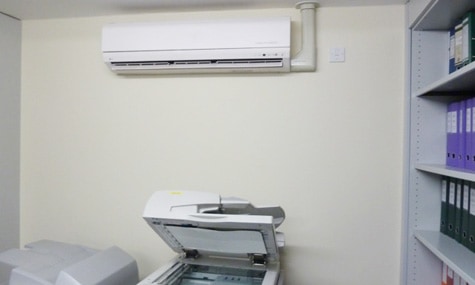
To enjoy a conservatory fully, some form of heating will be essential for chilly evenings and the winter season. Types of conservatory heating are variable UK wide so it is a question of finding the right solution for your own personal space. Because conservatories are glass structures, the potential for heat escape is massive. In fact a double glazed conservatory will lose heat eight times more quickly than through a cavity wall so it is important that cost effective heating is installed at the build or added later.

There are plus and minus points for different methods of heating a conservatory and here we will look at five kinds of conservatory heating UK wide. There are electric heaters for conservatories, oil heaters, underfloor, and air conditioning or heat pump technology which are the ultimate heaters for conservatory use.

Fan Heaters for Conservatories

This method of heating is convenient as portable units are readily available and just need to be plugged in to an electrical socket. Electrical heaters for conservatories like this will not be expensive to buy as they simply pass air over an electrical element to heat the air. They can be quite noisy which disturbs the peace of the conservatory and are also expensive to operate so are only recommended for occasional use when instant heat is required.

Oil Heaters

Another portable kind of heaters for conservatory is the oil filled radiator. These units are larger than fan devices but can usually be integrated discreetly in the conservatory. The distinct advantage is the quietness of operation and it is also a safer option as it is unlikely to be knocked over, plus the surface area is overall a lower operating temperature. Although a safer option, these units are still expensive to run.

Central Heating

Central heating seems a logical way for heating the conservatory and in a brand new build may already be incorporated. If there is the option for thermostatic control and the option to switch the radiator off then it can be a good way to use the heat. The difficulty arises when you only want to heat the conservatory and not the other rooms in the house. Also, the radiator temperature will need to be higher in the conservatory. Normally a backup heat source would be needed so it is not so convenient when this is taken into account, although it can be economical if the whole heating system is in use anyway.

Under-floor Heating

This heating for conservatories is desirable as there is nothing to see in terms of devices and the heated floor means that the usual tiled conservatory floors are warm to walk on. While it is quite a cost efficient method, the installation costs can be high which is not so good for those on a budget

Air Conditioning

This method allows you to heat and cool your conservatory providing the best of all worlds. In summer, you can sit in the cool and come the winter months, the process is reversed. Most units can be remote controlled so you can adjust to suit personal comfort at the touch of a button. The humidity levels in the room; especially if you have plants can be adjusted to the correct ambience. There are many types of air conditioning units that offer style, quality and performance at affordable prices that come backed by a guarantee and back up service.

As can be seen there are many ways you can install heaters for conservatories and the general rule is that the higher cost of installation outweighs the eventual running costs. It is important therefore to consider your conservatory usage and how much of your budget can be spent on running costs and installation. Generally speaking, an hour of heat from a 2KW electrical appliance will cost 24p going down to 9p with more sophisticated options.

We’re here to help so give us a call if you’d like to have a chat and discuss your conservatory heating options.

Air Conditioning Services London

Simply Air Conditioning London installs, services, and repairs air conditioning systems for homes and businesses across London. Contact us for a free quote.

Quote from one of our happy air deflector free trial recipients:

“Our open plan office houses around 100 people. Air distribution and draft was an issue for some of them prior to fitting air deflectors. Since the fitting we’ve not had a single complaint!”

How we got here

Air conditioning is known to have been applied in Ancient Rome: aqueduct water was passed through walls of houses to cool them. In medieval Persia similar techniques involving the use of cisterns and wind towers were used in the hot season to cool buildings.

Modern air conditioning emerged after advances in 19th Century chemistry, and it was Willis Haviland Carrier who invented and first used a large-scale electrical air conditioning system in 1902.

Air Conditioner Definition

An appliance, unit, system, or machine designed to stabilise the temperature and humidity of air within an area (used for both heating as well as cooling). A refrigeration cycle is the most common method of achieving this although sometimes evaporative coolers are used for comfort cooling inside buildings and vehicles.

Main Pages

Statutory Air Conditioning Regulations

As a building manager or owner, once you have an air conditioning system in place, it is your responsibility to ensure that the system complies with the UK standards office air conditioning directives. Your air conditioning system must operate within the law and directives laid down in legislation to avoid being fined for incorrect operating practices and systems failures of different kinds upon inspection.

It can be confusing but with this guide we hope to steer you through the UK standards for office air conditioning. The primary directive is the Energy Performance of Buildings EU directive (EPBD) that has the mandate for all inspection regimes within the remit that covers commercial buildings.

The statutory inspection guidelines are detailed below and later there will be a further breakdown of information to help building managers and owners to comply with regulations for their office air conditioning systems.

WHAT WHY WHO
F-Gas Scheduled Statutory Inspection

Systems over 3 kg refrigerant -inspect at 12 months.

Systems over 30kg refrigerant – inspect at 6 months.

Systems over 300kg refrigerant – inspect at 3 months.

To ensure the ongoing integrity of the office air conditioning standards in accordance with the directive F-Gas accredited engineer
BS EN 15004 F-Gas Statutory Inspection Requirements

  • All air conditioning assets must be labelled with asset number
  • A central asset log must be maintained by the Building manager
  • This log is to include F-Gas certification number, engineer details, maintenance history, unit serial numbers and records of refrigerant added or removed.
EC Regulation 842/2006 stipulates that

  • Leakage checks are performed
  • Repairs must be actioned
  • Gases are recovered to avoid air pollution
  • Certified professionals and companies are to be used
  • Labelling on some equipment
  • Banning of some F-gas products.
  • Information to be reported back the Commission.
F-Gas accredited engineer
Energy Performance Certificate (EPC)
If a building is over 500m2 and occupation began after 2008 then a whole building energy assessment is required. Once the assessment is complete then the certificate is valid for 10 years.
This process is designed to help improve efficiency and reduce energy usage, operating costs and carbon footprint. Accredited and registered energy assessor
Registered Energy Assessor Inspection
To be completed within 5 years of installation
This inspection captures those installations not requiring an EPC at the present time.

The process is designed to help improve efficiency and reduce energy usage, operating costs and carbon footprint.

Accredited and registered energy assessor

Looking into these mandatory inspections a little more, they are designed to safeguard and assist building owners to ensure the integrity of office air conditioning systems and ensure they conform to UK standards.

Fluorinated greenhouse gases fall under the Kyoto Protocol to which the EU has subscribed to reduce emissions. F-Gas is a chemical that contains Fluorine. Fluorine within the gas is a greenhouse gas thereby potentially forming a reflective layer in the atmosphere that causes harmful rays from the sun to the surface of Earth causing a build-up of gas that warms the planet. The long term effects of this are not fully known but the impact is already being seen.

Penalties for not complying with the regulations depend on the type of non-conformance and where the case is tried. There is a maximum fine of £5000 in Magistrates Court but if a company were convicted in Crown Court, then the fine could be unlimited. Therefore it makes sense to comply with the statutory regulations and UK standards

The onus is on the building owners to keep records and logs of the air conditioning system including asset management and maintenance records. Records must also monitor and show the specific quantities refrigerant that has been added or removed from a system along with details of disposal and waste management. While contractors do keep records and computerised systems, the building owner is ultimately responsible for maintaining the information required centrally.

Remember that only work done by accredited and registered F-gas engineers, such as Simply Air Conditioning London, will be valid. We are always happy to discuss any queries you may have and help you to set up a routine maintenance and inspection programme that will keep you compliant and save energy at the same time.

Quote from one of our happy air deflector free trial recipients:

“Our open plan office houses around 100 people. Air distribution and draft was an issue for some of them prior to fitting air deflectors. Since the fitting we’ve not had a single complaint!”

How we got here

Air conditioning is known to have been applied in Ancient Rome: aqueduct water was passed through walls of houses to cool them. In medieval Persia similar techniques involving the use of cisterns and wind towers were used in the hot season to cool buildings.

Modern air conditioning emerged after advances in 19th Century chemistry, and it was Willis Haviland Carrier who invented and first used a large-scale electrical air conditioning system in 1902.

Air Conditioner Definition

An appliance, unit, system, or machine designed to stabilise the temperature and humidity of air within an area (used for both heating as well as cooling). A refrigeration cycle is the most common method of achieving this although sometimes evaporative coolers are used for comfort cooling inside buildings and vehicles.

Main Pages

Office Air Conditioning Health and Safety

As a business owner, deciding to install an air conditioning system to improve working conditions in the office is only the beginning. There are many things to be taken into consideration not least office air conditioning health and safety. In an effort to demystify some of the office air conditioning health and safety rules and regulations, we have put together this article to assist business owners to identify what their responsibilities are and how we can help as an accredited air conditioning company that understands the UK and EU regulations.

There are several tasks that are incumbent on the person responsible for the air conditioning system in the office. Ultimately this responsibility will lay with the business owner but you may have a building facilities manager or maintenance team to delegate these tasks to.

Legislation

Air conditioning health & safety checksThe Legislation in the UK states that owning and operating equipment that contains fluorinated greenhouse gases (F-gases) or ozone depleting substances (ODS) means the equipment must be managed to avoid polluting the environment. This is one of the most important conformance exercises. To help with the terminology, ODS are chemicals which cause the ozone layer to reduce thus allowing harmful rays to enter the atmosphere. F-Gases contain fluorine. These gases contribute to global warming by trapping heat in the atmosphere.

Managing these substances requires a plan to handle these gases to comply with legislation for office air conditioning safety. These tasks include containing, recovering and destroying all refrigerant gases in compliance with UK legislation, checking systems for leaks at least annually and more often for large scale systems and only allowing qualified people to handle these substances. If the system holds less than 3kg of F-gas, a leak test is not required, but over this amount and up to a maximum of 29kg an annual test is required.

This is just one of the basic compliance actions needed for equipment maintenance.

Office Air Conditioning Health & Safety

You may have decided upon a new air conditioning system because of Health and Safety Executive: inspections, building refurbishments or just because you want to improve conditions for workers.

[box type=”info”]Obviously you will be addressing such issues as controlling thermal effects in the office which may be caused by radiant heat sources, for example the sun through glass or even the lack of radiant heat or an inefficient heating system. Keeping office workers in a comfortable temperature and the correct level of humidity is vital and should be carefully thought out throughout your system design phase.[/box]

Health of workers

The office needs proper ventilation with clean air drawn from the outside fresh air to be circulated throughout the office building. This ventilation which is key in any office air conditioning system and will also remove humid warm air and circulate air which keeps the environment fresh. Stale air and dusty environments may impact on the health of office workers.

Maintaining Temperatures

Thermal comfort of a worker is a mix of environmental factors such as heat and humidity) combined with individual factors such as clothing and amount of physical effort expended. However in most office environments the work is sedentary so an ambient temperature can be maintained that will suit most workers – usually around 16 degrees Celsius.

The health risks increase where extremes of temperature are experienced at both ends of the spectrum – hot and cold so those workers who are expected to work in extremes, must be catered for accordingly.

Energy expenditure

Commercial property consumes 30% of UK energy. The UK Government has revised Building Regulations to reduce energy consumption and minimise CO2 emissions.

Building Regulations set minimum legal standards for every building component that consumes energy and applies a building efficiency rating. Other regulations set down minimum legal requirements for ventilation, to ensure fresh air for a productive and healthy working environment.

Office air conditioning health and safety and adherence to proper maintenance and compliance with regulations is an ongoing cost over and above the capital expenditure of the initial system. However, regular maintenance by professional air conditioning engineers will ensure that the systems comply with all regulatory and legal requirements and will ensure that the system is running in the most cost effective way thus using less energy. Our regular maintenance programmes in the long run are cheaper than paying for a one off inspection and repair of problems.

Working alongside our clients we endeavour to address office air conditioning health and safety concerns before work has begun.

Quote from one of our happy air deflector free trial recipients:

“Our open plan office houses around 100 people. Air distribution and draft was an issue for some of them prior to fitting air deflectors. Since the fitting we’ve not had a single complaint!”

How we got here

Air conditioning is known to have been applied in Ancient Rome: aqueduct water was passed through walls of houses to cool them. In medieval Persia similar techniques involving the use of cisterns and wind towers were used in the hot season to cool buildings.

Modern air conditioning emerged after advances in 19th Century chemistry, and it was Willis Haviland Carrier who invented and first used a large-scale electrical air conditioning system in 1902.

Air Conditioner Definition

An appliance, unit, system, or machine designed to stabilise the temperature and humidity of air within an area (used for both heating as well as cooling). A refrigeration cycle is the most common method of achieving this although sometimes evaporative coolers are used for comfort cooling inside buildings and vehicles.

Main Pages

Office Air Conditioning Temperature

During the summer months some very high air temperatures have been reached making it a very uncomfortable experience for those working without office air conditioning. In a perfect world an ideal office air conditioning temperature would make the environment comfortable and productive for workers who are in offices, shops and other indoor places of work.

Office Air Conditioning Temperature
Photo by Pete. Licensed under CC BY 2.0
For those workers who do not have the luxury of working in an optimum office air conditioning temperature, it may be a question of “sweating it out” as there is no set maximum temperature laid down by any health and safety executive whereby an employee can stop working. The statement now says that during working hours, the temperature in all workplaces inside buildings shall be reasonable. Not much comfort to those working in stifling office buildings. The interpretation of reasonable is variable as the expected temperatures in a kitchen will always be higher than those in a dental surgery, retail space or office.

Employers are not under any obligation to supply air conditioning, but those who value productivity and normal working will make an effort to keep an office air conditioning temperature standard during exceptional weather periods even if they hire portable units. While obliged to provide fresh drinking water, there is no requirement that it should be chilled for employees. When the heat is on it may be worthwhile for employers to consider the effects on high temperatures in workplaces.

Considering employees are performing tasks for 8 hours a day or more, oppressive heat reduces productivity immensely. When employees are sweating, suffering with swollen ankles and are unable to focus on the job in hand it is time to cool them down. Office air temperature is one of the single most causes of productivity drops. Studies show that the optimum office temperature is between 21 to 23 degrees Celsius although other studies show up to 25 degrees Celsius is optimal. After their own study, the UK government believe that 23 degrees Celsius is the perfect temperature. The recommended office air conditioning temperature should satisfy 70 to 80% of the work force.

This simple table shows how productivity increases or decreases with temperature variances:
As the temperature increases:

  • 77 degrees F = 98% productive
  • 82 degrees F = 95%
  • 87 degrees F = 90%
  • 92 degrees F = 85%

As temperature decreases

  • At 66 degrees = 98% productive
  • 63 degrees F = 95%
  • 59 degrees F = 90%

It is not as simple as deciding on an office air conditioning temperature and sticking to it, there are seasonal variations that will cause people to react differently to the ambient temperature. Even within a set temperature, there will be vast differences with how the atmosphere is perceived.

Time of Year

Expectations are adjusted to expect coolness in winter and warmer in summer therefore an individual can be happy with a cooler temperature in the office in winter and slightly warmer in summer.

Clothes

Clothing affects comfort and people arriving at an office in thick over coats with heavyweight day clothing in winter will need an overall cooler temperature from the air conditioning to be comfortable. In summer people will wear lightweight, thinner clothing so the opposite will be so.

Weight and Age

An individual’s BMI will affect how office air conditioning feels to them; thinner older people will feel the cold more easily while a higher BMI will keep a person warmer due to extra body fat.

Humidity

Humidity with high temperatures is much more difficult to deal with as the body cannot evaporate sweat and there is a feeling of heaviness and sluggishness. Without humidity, high temperatures are far easier to bear. Any office air conditioning will keep a relative humidity level that will keep workers in comfort. The same air temperature can feel twice as hot with very high humidity.

Worker productivity is affected by the environment. By maintaining a comfortable temperature and humidity level workers will continue to have high productivity levels and avoid sick days. It takes a commitment from office and business owners to ensure the wellbeing of their workers and in the long run is more than worth it.

Quote from one of our happy air deflector free trial recipients:

“Our open plan office houses around 100 people. Air distribution and draft was an issue for some of them prior to fitting air deflectors. Since the fitting we’ve not had a single complaint!”

How we got here

Air conditioning is known to have been applied in Ancient Rome: aqueduct water was passed through walls of houses to cool them. In medieval Persia similar techniques involving the use of cisterns and wind towers were used in the hot season to cool buildings.

Modern air conditioning emerged after advances in 19th Century chemistry, and it was Willis Haviland Carrier who invented and first used a large-scale electrical air conditioning system in 1902.

Air Conditioner Definition

An appliance, unit, system, or machine designed to stabilise the temperature and humidity of air within an area (used for both heating as well as cooling). A refrigeration cycle is the most common method of achieving this although sometimes evaporative coolers are used for comfort cooling inside buildings and vehicles.

Main Pages

Office Air Conditioning Smells

An office air conditioning system is essential these days and is in constant use especially during times of very warm weather. Air conditioning leads to improved productivity from office workers and helps to keep the air circulating and filtered, free from dust and other air pollutants. There may be a time when your office air conditioning smells with the air coming through with a foul odour or unpleasant aroma. The smell may be caused by many original sources and air conditioning smells can be caused by something as simple as a dirty unit or may be the smell from the remains of an unfortunate small mammal or bird that has become stuck somewhere in the ducting or unit.

Office Air Conditioner ServicingFortunately, most AC systems are in the safe hands of air conditioning engineers who maintain the systems before they start to smell, but if you are experiencing any air con variants smell wise, we can help you to trace the problem find the solution and fix it for you. There are some things that you can do to check where the smell is coming from but this will not replace any kind of professional analysis and investigation of where and how the smell is caused.

Office air conditioning smells may indicate there is a risk to health so any odour however faint should always be investigated by professional AC engineers. Poor air quality leads to some quite severe health symptoms so air conditioning smells should always be taken seriously.

Some Causes of Office Air Conditioning Smells

Mould

Moisture is always present in office air conditioning systems. An excess of moisture may cause mould spores to multiply within the air conditioning system and grow in colonies throughout the unit and ducting. The smell of mould is often the first sign there is a hazard in the ac system and it is quite likely the mould spores will have been present in the air within the office building. As can be clearly understood, mould spores in the atmosphere can cause respiratory ailments as the spores are inhaled. The smell from a mouldy air conditioning system is very obvious. The mould growth is usually on the ac coils and the lining as this is where most dust collects. The dust is a good nutrient for mould spores so they proliferate easily.

Small Mammals and Birds

Sometimes office air conditioning ducts are compromised by the presence of a small creature such as a bird, squirrel, mouse, rat or other creature. While air con systems are designed to be rodent and animal proof, sometimes a creature can become trapped within ducting and unable to get out again. As there is no food source for the animals, they perish and then when they start to decompose, an unforgettable foul stench begins to be emitted from the air conditioning vents sometimes making it impossible to stay in the building. Swift removal of the animal carcass is paramount although the odour can linger on for a while. Professional cleaning will soon solve this particularly unpleasant smell.

Coolant Leak

From time to time, office air conditioning may malfunction that can result in coolant leaking. Coolant has a distinctive smell, usually subtle but unpleasantly musty. Some coolants are dangerous when leaking although some older types of coolant gases such as Freon are not commonly used anymore. Nevertheless, exposure to coolant gases can cause health issues such as irregular heartbeat in people with cardiac problems. The first signs of coolant leakage should be addressed immediately because of these risks to office workers.

Standing Water and Other Debris

Plant vegetation and other debris can all rot down within the air conditioning unit leading to odour which while unpleasant is not as hazardous as some smells. Standing water accumulated in your office air conditioning can also cause smells and these issues may be rectified by user maintenance but should still be assessed by professional air conditioning engineers in order to ensure there are no further hazards involved.

Our accredited engineers will tackle the job of odour removal if it is a problem for you and will also provide special deodoriser treatments during standard maintenance as well as supplying them after a troubleshooting visit when you are experiencing foul smells.

Finally, check that your office air conditioning system is the correct size for the room it is servicing. The wrong size unit can lead to the system being improperly operated for example i.e. being run constantly on a “low” setting which does not allow enough evaporation which can leave standing water in the system to cause smells.

Quote from one of our happy air deflector free trial recipients:

“Our open plan office houses around 100 people. Air distribution and draft was an issue for some of them prior to fitting air deflectors. Since the fitting we’ve not had a single complaint!”

How we got here

Air conditioning is known to have been applied in Ancient Rome: aqueduct water was passed through walls of houses to cool them. In medieval Persia similar techniques involving the use of cisterns and wind towers were used in the hot season to cool buildings.

Modern air conditioning emerged after advances in 19th Century chemistry, and it was Willis Haviland Carrier who invented and first used a large-scale electrical air conditioning system in 1902.

Air Conditioner Definition

An appliance, unit, system, or machine designed to stabilise the temperature and humidity of air within an area (used for both heating as well as cooling). A refrigeration cycle is the most common method of achieving this although sometimes evaporative coolers are used for comfort cooling inside buildings and vehicles.

Main Pages

Small Office Air Conditioning Review

office air conditioningThe current economic climate is making many small businesses look for ways to save money, improve productivity and also help the environment. One way a small business can achieve this is to install a small office hvac. Small office air conditioning solutions can be affordable and bring many benefits to the business by providing a comfortable working environment for workers which results in increased productivity. Anything these days that helps profit margins is to be welcomed.

Finding the right small office air conditioning solutions does not have to be difficult. There are several systems to choose from that can be integrated into existing offices or if you are planning new offices, there is small office hvac that can be installed during the build stage. Small office air conditioning types vary and it depends on requirements and budget as to which one is the right small office hvac for purpose.

The first thing to be done is to have a survey done by a professional refrigeration engineer. We always recommend a no obligation chat so that we can establish the requirements of the customer and recommend the perfect solution for needs. It is not just a case of buying a system, small office air conditioning sizing needs to be taken into account and we also need to use a small office btu calculator so that we can install a system that is energy efficient, works at optimum levels for the size and location of the office and ensure the system is discreet in the office décor.

BTU Calculations

BTU is a standard term meaning British Thermal Unit. It is defined as the amount of heat needed to increase the temperature of 1 pound of water by 1 degree Fahrenheit at maximum density. BTU is commonly referred to as BTU/hr (BTU per hour). This unit is used for energy to heat a space and energy to cool a space. Our small office air conditioning BTU calculator needs to include certain variables in the calculation to define the right BTU value small office hvac for your individual requirements.

BTU is calculated using the room length, room width, room height, any north facing walls, windows, doors, and double glazing. Each factor has an impact on the calculation result. The calculation works by multiplying the width times the length of the area to be cooled. Usually this result is multiplied by 25 BTU. This will result in the perfect small office air conditioning sizing meaning an air conditioner can be installed that is efficient whether the day is humid, rainy, cold or hot.

Taking a small individual office of 12 feet by 15 feet gives a square footage of 180 sq. feet which when multiplied by 25 BTU gives the small office air conditioning sizing that is the minimum size required, in this example a 4500 BTU unit is needed. We have an online BTU calculator which you can use to estimate your needs.

Small Office Air Conditioning Types

Ceiling Cassette Units

This small office air conditioning solution is perfect for premises where wall and floor space is limited. This type of air conditioning unit is operationally very quiet and is mounted flush within suspended ceilings. Controls are usually wall mounted. The cassette is square and incorporates four grilles for even air flow. This option is great for open plan offices and larger areas in the building.

Compact Ceiling Cassette Units

These units are very similar to the standard sized cassette units except the unit can fit a 600x600mm common ceiling panel which replaces the ceiling tile.

Under Ceiling Units

This unit sits under the ceiling and the whole body of the unit can be seen. Air flow is from a grille on the unit front with a circulation of around 12 feet from the grille making this unit ideal for long narrow areas or IT server rooms.

Ducted or Hidden Units

These small office air conditioning solutions are the perfect choice for offices. This ducted air conditioning unit is hidden in the ceiling space. Networked ducts distribute air supplying air to many rooms at one time. Distribution grilles which are connected to every duct ensure even temperatures throughout.

Floor Mounted Units

Indoor units may be low level mounted on a wall. This type of unit is ideal for small spaces.

Wall Mounted Units

These air conditioning unit types are mounted and fixed on the wall, close to the ceiling. These high wall units are once again perfect for small office hvac and IT server rooms.

As can be seen there is a lot to think about when considering small office air conditioning solutions, but it is really quite simple when you engage the services of a professional air conditioning company. We pride ourselves on providing the best advice based on years of practical experience and installations of small office air conditioning solutions. We can guide you through the whole process with no obligation and will guarantee that your office will be a place your staff will love working in every day.

Quote from one of our happy air deflector free trial recipients:

“Our open plan office houses around 100 people. Air distribution and draft was an issue for some of them prior to fitting air deflectors. Since the fitting we’ve not had a single complaint!”

How we got here

Air conditioning is known to have been applied in Ancient Rome: aqueduct water was passed through walls of houses to cool them. In medieval Persia similar techniques involving the use of cisterns and wind towers were used in the hot season to cool buildings.

Modern air conditioning emerged after advances in 19th Century chemistry, and it was Willis Haviland Carrier who invented and first used a large-scale electrical air conditioning system in 1902.

Air Conditioner Definition

An appliance, unit, system, or machine designed to stabilise the temperature and humidity of air within an area (used for both heating as well as cooling). A refrigeration cycle is the most common method of achieving this although sometimes evaporative coolers are used for comfort cooling inside buildings and vehicles.

Main Pages