
Statutory Air Conditioning Regulations
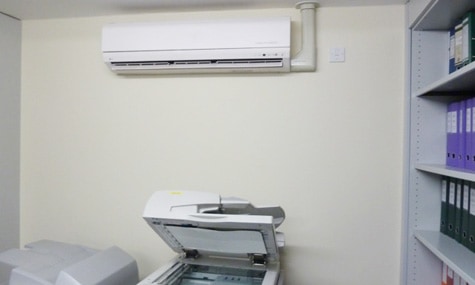
As a building manager or owner, once you have an air conditioning system in place, it is your responsibility to ensure that the system complies with the UK standards office air conditioning directives. Your air conditioning system must operate within the law and directives laid down in legislation to avoid being fined for incorrect operating practices and systems failures of different kinds upon inspection.
It can be confusing but with this guide we hope to steer you through the UK standards for office air conditioning. The primary directive is the Energy Performance of Buildings EU directive (EPBD) that has the mandate for all inspection regimes within the remit that covers commercial buildings.
The statutory inspection guidelines are detailed below and later there will be a further breakdown of information to help building managers and owners to comply with regulations for their office air conditioning systems.
| WHAT | WHY | WHO |
|
F-Gas Scheduled Statutory Inspection
Systems over 3 kg refrigerant -inspect at 12 months. Systems over 30kg refrigerant – inspect at 6 months. Systems over 300kg refrigerant – inspect at 3 months. |
To ensure the ongoing integrity of the office air conditioning standards in accordance with the directive | F-Gas accredited engineer |
BS EN 15004 F-Gas Statutory Inspection Requirements
|
EC Regulation 842/2006 stipulates that
|
F-Gas accredited engineer |
|
Energy Performance Certificate (EPC) If a building is over 500m2 and occupation began after 2008 then a whole building energy assessment is required. Once the assessment is complete then the certificate is valid for 10 years. |
This process is designed to help improve efficiency and reduce energy usage, operating costs and carbon footprint. | Accredited and registered energy assessor |
|
Registered Energy Assessor Inspection To be completed within 5 years of installation |
This inspection captures those installations not requiring an EPC at the present time.
The process is designed to help improve efficiency and reduce energy usage, operating costs and carbon footprint. |
Accredited and registered energy assessor |
Looking into these mandatory inspections a little more, they are designed to safeguard and assist building owners to ensure the integrity of office air conditioning systems and ensure they conform to UK standards.
Fluorinated greenhouse gases fall under the Kyoto Protocol to which the EU has subscribed to reduce emissions. F-Gas is a chemical that contains Fluorine. Fluorine within the gas is a greenhouse gas thereby potentially forming a reflective layer in the atmosphere that causes harmful rays from the sun to the surface of Earth causing a build-up of gas that warms the planet. The long term effects of this are not fully known but the impact is already being seen.
Penalties for not complying with the regulations depend on the type of non-conformance and where the case is tried. There is a maximum fine of £5000 in Magistrates Court but if a company were convicted in Crown Court, then the fine could be unlimited. Therefore it makes sense to comply with the statutory regulations and UK standards
The onus is on the building owners to keep records and logs of the air conditioning system including asset management and maintenance records. Records must also monitor and show the specific quantities refrigerant that has been added or removed from a system along with details of disposal and waste management. While contractors do keep records and computerised systems, the building owner is ultimately responsible for maintaining the information required centrally.
Remember that only work done by accredited and registered F-gas engineers, such as Simply Air Conditioning London, will be valid. We are always happy to discuss any queries you may have and help you to set up a routine maintenance and inspection programme that will keep you compliant and save energy at the same time.